Pilates Cues That Land: What Separates Useful Language From Filler
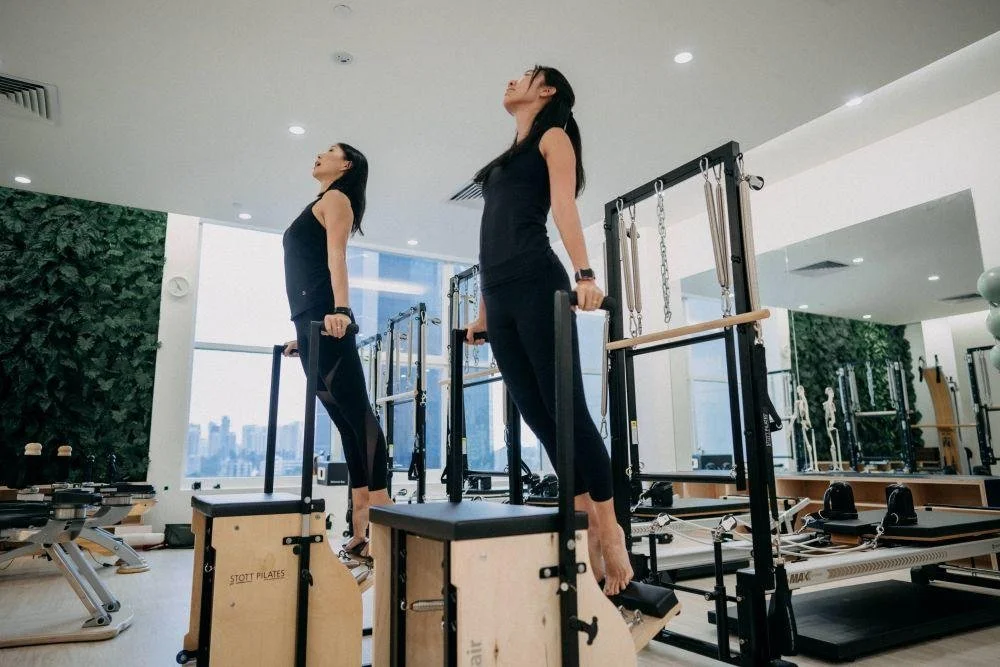
Knowing the exercise is only part of teaching Pilates. The harder skill is knowing what to say, when to say it and whether the client understands what you are asking them to change.
The exercise provides the structure. The cue directs the movement.
Every instructor develops a vocabulary of Pilates terms, anatomical instructions and familiar images. But a larger vocabulary does not automatically produce better teaching. A cue is useful only when it changes something: the client finds the intended muscle, improves their alignment or controls the movement more effectively.
Here is why some Pilates cues reach the body immediately while others become background noise.
Internal Cues Are Not Wrong, They're Often Just Misplaced
Motor-learning research often favours external cues, which direct attention towards the result of a movement rather than a specific body part. Instead of telling someone to contract a muscle, for example, an instructor may ask them to press the carriage with weight evenly placed on both heels or keep the strap at shoulder level.
These cues can work well because they give the client a clear outcome to produce.
Pilates is one of the few disciplines in which internal cues still earn their place, but only under a specific condition. An internal cue works when a person already has a felt reference for what you are addressing. Tell someone to feel the deep abdominals engage, and if they have located that sensation before, the instruction reaches them. If they have not, it lands in a vague place.
The key is to recognise which situation you are in, and either identify the felt reference first or cue toward it once it exists.
The Classic Pilates Phrases Need Translation
"Scoop the abs." "Navel to spine." "Lengthen through the crown."
These Pilates phrases were never arbitrary. They developed as shorthand for real biomechanical events, and somewhere in your training, someone unpacked what each one meant. The problem is that shorthand is repeated without conveying its meaning.
A cue stops serving its purpose the moment a client can comply with it without anything changing in the body. They hear the phrase, produce a version of the shape, and the rep is completed, but the target muscles may not have been activated at all.
A quick audit of the Pilates terms you rely on most is worth running. For each phrase, ask what it is actually asking the body to do and whether the client in front of you can produce that right now.
These are some good starting points to review:
Scoop the Abs: This phrase is cueing the deep abdominal muscles to stabilise the lower back and pelvis, but without a prior felt reference, many clients produce a breath-hold or superficial bracing instead.
Navel to Spine: This asks for activation of the deepest layer of the abdominal wall, but is often interpreted as a rigid full-abdominal pull-in that bypasses the target entirely.
Lengthen Through the Crown: This cues the spine to elongate and the head to align naturally over the shoulders, but it frequently produces a chin lift or a held breath instead.
Imagery Only Works When the Body Has a Place to Put It
Imagery is widely used in Pilates because the right image can make a complicated instruction easier to understand.
For example, you’ll often hear instructors saying phrases like “string lifting from the crown,” “weight pouring through the heels,” or the “ribcage softening over the pelvis.” When used correctly, these phrases can bypass the tendency to overthink, allowing the body to naturally move toward the intended position.
The condition is the same as with internal cues. Imagery becomes effective when the client has a prior somatic experience to map the image onto. When that reference does not yet exist, the image becomes descriptive rather than instructional. And visualisation without a body reference does not change motor output.
A practical tip is to establish the felt sense first, through tactile contact, a positional cue, or a simpler movement that isolates the target area. Once the body has found what you are asking for, add imagery to reinforce the movement.
Cue Economy, and the Timing Most Instructors Underuse
The most effective cue is not always the most detailed one. Often, it is simply the one delivered at the right moment in the breath or movement cycle. A cue given at the wrong point competes with the movement and loses, whether you are working in a private Pilates session or a small group class.
It helps to keep three categories distinct:
Setup Cues: These orient the body before movement begins, establishing position, breath, and intention ahead of the rep.
Refinement Cues: These intervene at the specific moment in the movement where a pattern typically breaks down.
Feedback Cues: These close the loop after the rep, helping the client build an accurate internal reference for what they just produced.
Problems arise when these cues are delivered all at once. A client who is still trying to understand the setup cannot also process three corrections and an explanation of what went wrong. The instructor’s job is to identify the most useful cue for that repetition. Once the client responds, the next detail can be added.
What a Clinically Trained Eye Adds to the Cue
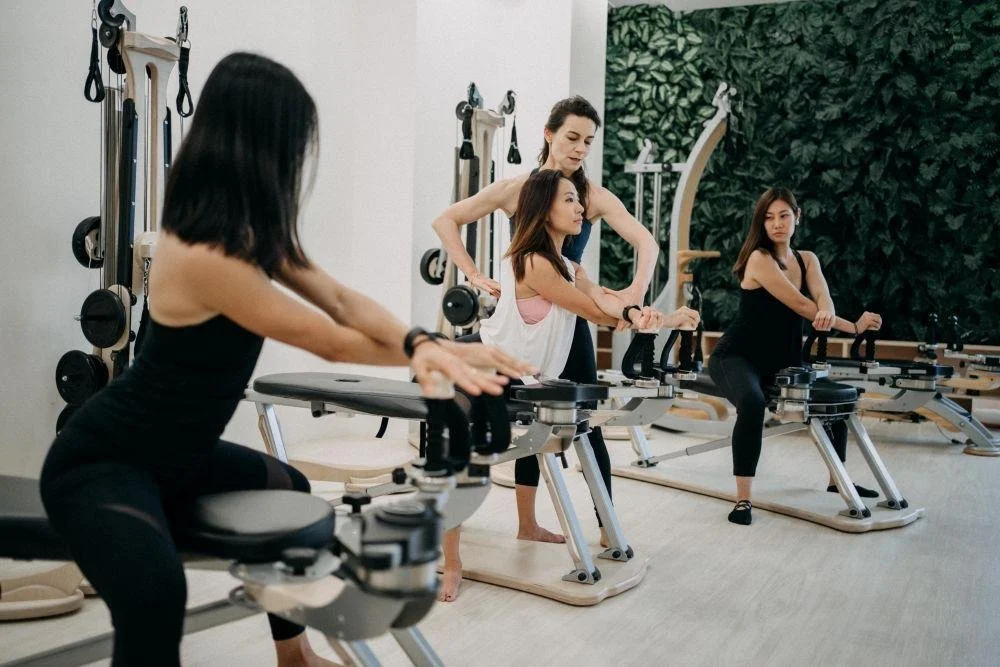
It is easy to notice that a cue is not landing. It is considerably harder to understand why, and then to determine whether an internal, external, tactile, or imagery-based cue will reach the movement pattern you are trying to change. Structured training allows you to see where the load is actually going in the body in front of you and what makes a difference.
Clinically trained instructors from reputable Pilates studios develop this through study of anatomy and movement assessment, including areas like pelvic floor function and lumbopelvic stabilisation. The assessment skills that come with clinical Pilates training allow for cue selection that is precise rather than intuitive. And that is what separates an instructor who knows the exercises from one who can reliably change how a body moves.
If you want to learn how to choose Pilates cues effectively, consider our Pilates teacher training programme. Get in touch with our team today to find out more.