What is Clinical Pilates, and How Does it Differ From Regular Pilates?
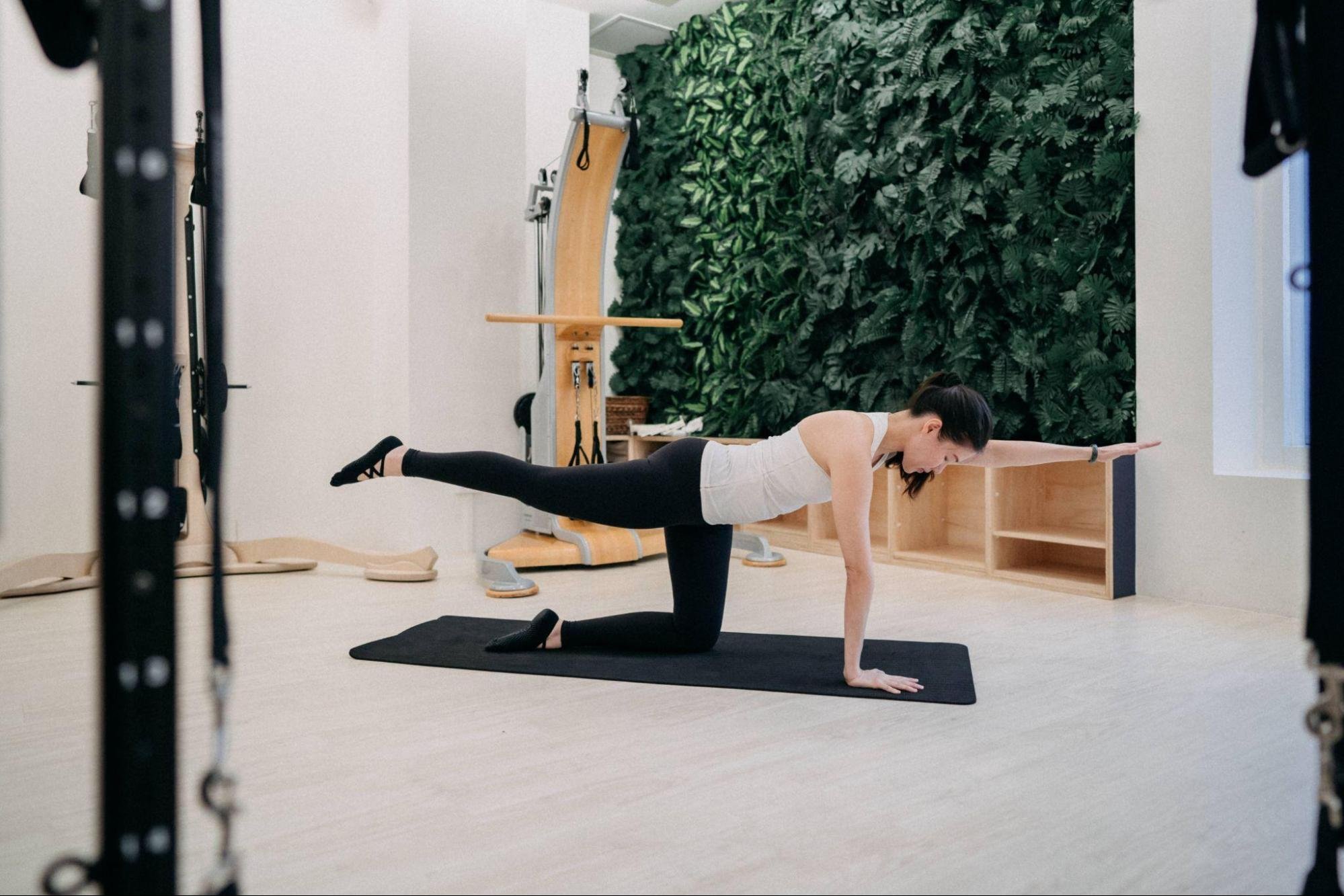
Walk into a traditional Pilates class and then a clinical session, and you will see the same Reformer and mat. Both draw on the same foundations: core strength, alignment, breath. So why the different names, and does the difference actually matter?
The distinction matters, particularly if your body is recovering from an injury. Attending a traditional group class with conditions like a disc bulge or post-surgical restrictions under an instructor without clinical training may put strain on your spine. Choosing the right format from the beginning protects your progress.
How Does Clinical Pilates Work?
A clinical Pilates session does not begin with Exercise 1. It begins with an assessment. Where does it hurt? How does your body move? What is your history? Only once the instructor has a clear picture of your situation does exercise selection begin.
This matters most for spinal conditions. The STOTT PILATES® method is built on Five Basic Principles, covering breath, pelvic placement, rib cage placement, scapular movement, and head and cervical spine position. In a clinical setting, these principles are modified to accommodate specific spinal pathologies. Someone with a lumbar disc bulge, for example, may need to avoid end-range spinal flexion entirely, requiring every exercise in their programme to be selected and adjusted around that restriction. Someone with spondylolisthesis, a condition where one vertebra shifts forward over the one below it, needs a different approach again, with careful management of spinal extension and loading.
A group class follows a sequence, while a clinical session is tailored for one body, which can change within a session as the instructor observes how you move and respond.
What is the Difference Between Clinical Pilates and Regular Pilates?
Traditional Pilates is typically a choreographed class for the average body, with level modifications available but no clinical assessment to inform those adjustments. Clinical Pilates or physiotherapy Pilates is a bespoke programme written for your body, your history, and your current capacity, and it evolves as you progress.
The setting often reflects this difference. Traditional studios tend to be energetic, group-fitness environments. Clinical Pilates is more commonly delivered in a calm, specialised studio or rehab clinics, with smaller groups and close supervision, or in a private one-to-one format.
Purpose and Focus
The goals of each format are different, and so are the muscle groups each one prioritises.
Traditional Pilates: Prioritises core conditioning, toning, flexibility, and body awareness. Sessions work the whole body in a balanced way, effectively achieving these goals.
Clinical Pilates: Focuses on restoring function. The goals are to reduce pain and support recovery, such as exercising again without discomfort or lifting a child without straining your lower back. It also prioritises the deep stabilisers, specifically the multifidus (the small muscles running along the vertebrae that provide segmental spinal control) and the transverse abdominis (the deepest abdominal layer that functions as a natural corset around the spine). These muscles tend to become inactive in response to pain or injury, and reactivating them is the main goal of any clinical programme.
Integration of Rehabilitation Principles
The exercise repertoire looks similar, but what clinical Pilates does with it is different:
Traditional Pilates: Joseph Pilates developed Pilates in the 1920s without access to modern biomechanical research or physiotherapy.
Clinical Pilates: Draws on that original foundation but incorporates decades of evidence from musculoskeletal rehabilitation and movement science that have developed since. The Hundred, a traditional Pilates staple requiring sustained spinal flexion and loaded breathing, and the Teaser, which demands significant lumbar and hip flexor control, are often contra-indicated for people with specific spinal concerns. In a clinical setting, these movements are either omitted or re-engineered. The position, movement, loading, and tempo are adjusted so the therapeutic benefit is preserved while the risk is removed.
Instructor Qualifications
The qualification gap between traditional and clinical instructors is substantial, and it matters in practice:
Traditional Pilates: Instructors typically hold a Pilates certification representing between 200 and 500 hours of training in method, repertoire, and technique. This equips them to teach group classes.
Clinical Pilates: Instructors are usually physiotherapists, osteopaths, or exercise physiologists who have completed Pilates teacher training in addition to their primary clinical qualifications. They can read a medical referral or an imaging report, and know what a finding like a disc protrusion at L4-L5 or a labral tear actually means for how a session should be designed.
At Breathe Pilates, several of our instructors hold physiotherapy qualifications, and rehab-trained practitioners carry out all clinical work.
Get the Right Format with Breathe Pilates
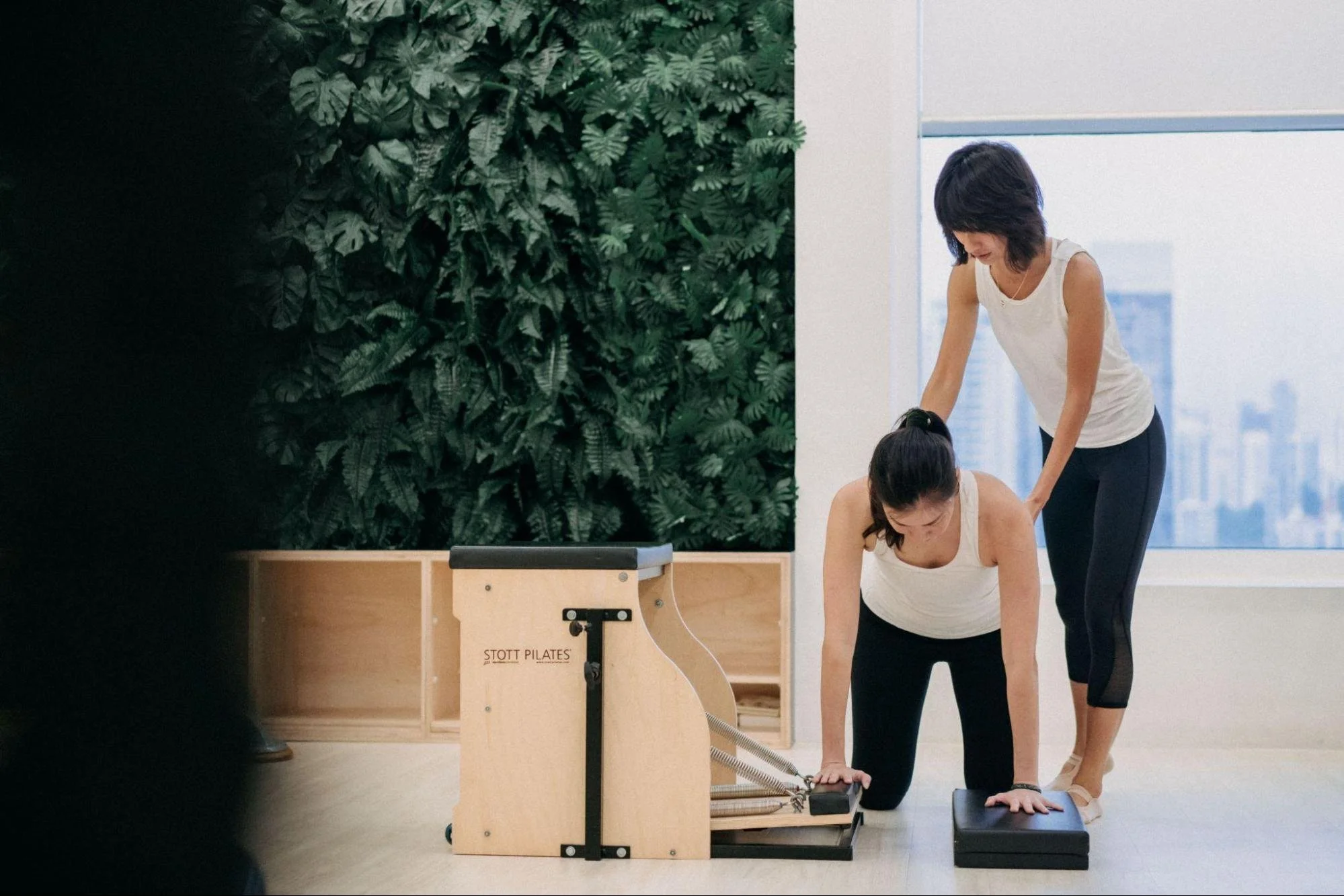
If you are recovering from surgery or dealing with a known injury, clinical Pilates is the appropriate starting point. The assessment-first approach, modified programming, and rehab-trained instructors are there precisely for this stage. But if you are looking for an effective fitness routine, traditional Pilates delivers this well. Our small-group classes are capped at six participants, so even in a group format, your instructor can keep an eye on your form and progress you appropriately.
Both types are excellent for longevity, provided they are used at the right stage of your journey. Many of our clients move between them over time as their goals shift. To find the right starting point, speak with our team across our Pilates studios. Try a session and feel the difference a focused class can make.