Five Signs You're Ready to Move Up a Pilates Level
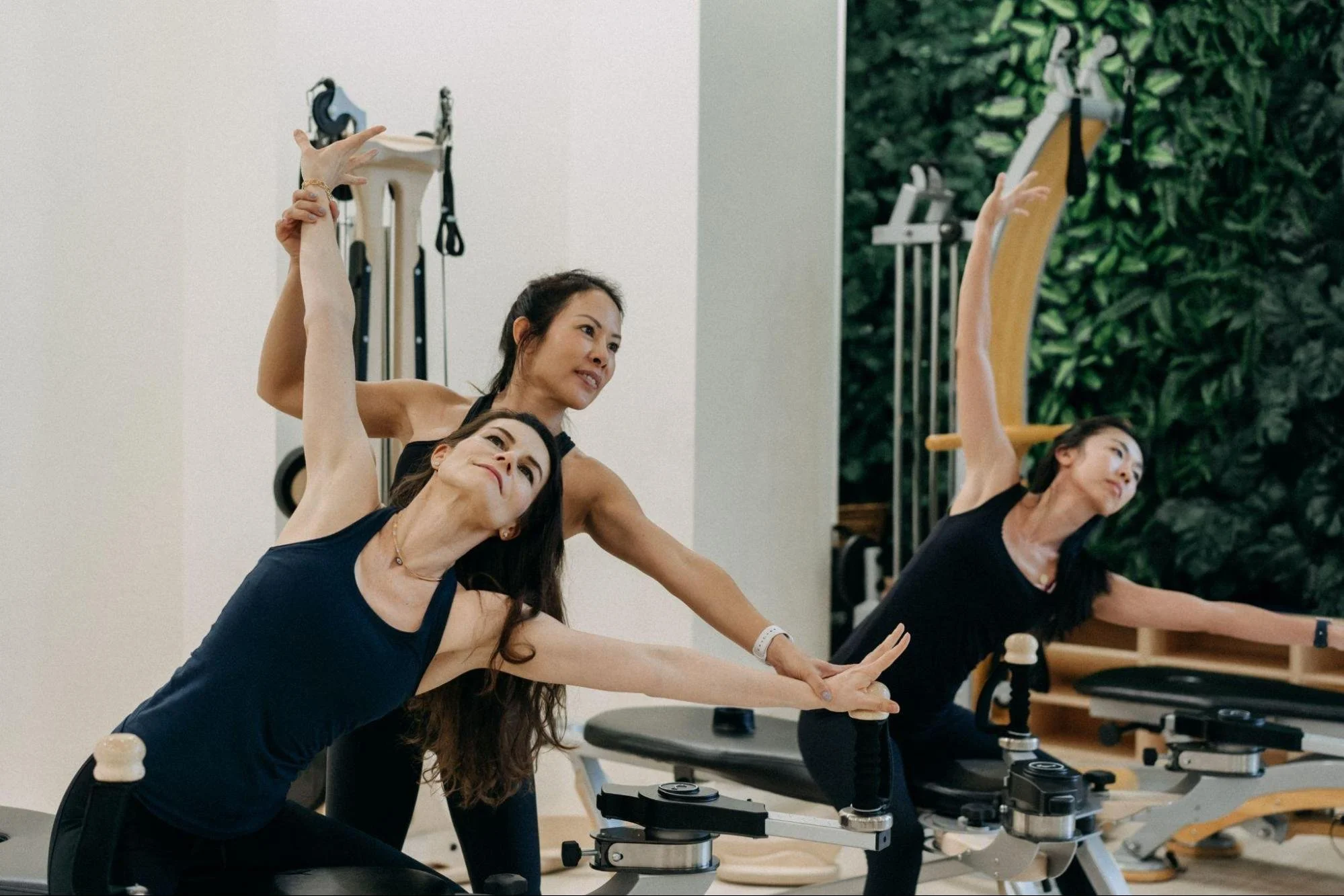
Most people who practise Pilates consistently eventually ask the same question: when should I move up a level?
The answer is not based on how many months you have attended or whether the current class feels familiar. Pilates levels reflect how well you can maintain alignment, control the springs and coordinate several movements at once. As the level rises, the exercises involve more load, less support, longer sequences and more complex transitions.
A trained instructor will look for control that remains consistent across the session, not one exercise performed well on one occasion. These are five signs that your current level may no longer be challenging you enough.
Sign 1: Your Instructor is Correcting You Less Often
In Level 1 Pilates, instructors regularly cue the fundamentals: breathing, spinal position, rib placement, shoulder stability and control of the pelvis.
As these skills become more familiar, you should need fewer reminders to maintain them. You can move your arms or legs without the ribcage lifting, keep the pelvis stable while the carriage moves and control the springs on the return without rushing.
This does not mean your instructor will stop correcting you. The cues should become more detailed. Instead of repeatedly reminding you where to place your body, your instructor can focus on improving the quality, precision and coordination of the movement.
Sign 2: You Already Know What is Coming Next
Knowing the exercises in your class is a good thing. Being able to predict every move, spring change and pace before your instructor speaks is not.
There is a difference between doing an exercise with better control each time, which helps you continue improving, and repeating the same movements. If your Pilates class no longer challenges your body, it may be time to progress to the next level.
Sign 3: You Are Curious About the Other Equipment
The Reformer offers an extensive exercise repertoire, but it is only one part of the Pilates system.
The Chair, Cadillac, Tower and Barrels each challenge the body differently. The Chair uses a smaller base of support and places greater demands on balance and single-sided control. The Cadillac and Tower allow exercises to be performed from different angles using springs, bars and straps. The Barrels focus on spinal movement, trunk control and positioning without a moving carriage.
Becoming curious about these apparatus may indicate that you are ready for a different type of challenge.
Sign 4: Your Goals Have Become More Specific
Many people begin Pilates with broad goals such as becoming stronger, improving posture or moving more comfortably. Over time, those goals become more defined.
You may want to improve single-leg stability for running, build rotational strength for a sport, strengthen the back of the body or regain control after an injury. Specific goals like these are a sign you are ready for more structured progression, with sessions planned around what your body actually needs rather than just attendance.
Sign 5: You Recover Faster Than You Are Improving
Finishing class without feeling exhausted does not automatically mean you should move up. Pilates is not measured by soreness, sweating or how tired you feel afterwards.
A better question is whether your strength, control and coordination are still improving.
If you leave class feeling you could easily do it again, and you are no longer noticing gains in strength or control, your current sessions are not asking enough of your body. Simply adding more Pilates classes to your week will rarely fix this.
What helps is moving to the next level that demands more coordination, control and stamina, with an instructor keeping your form in check.
What Moving Up a Pilates Level Actually Looks Like
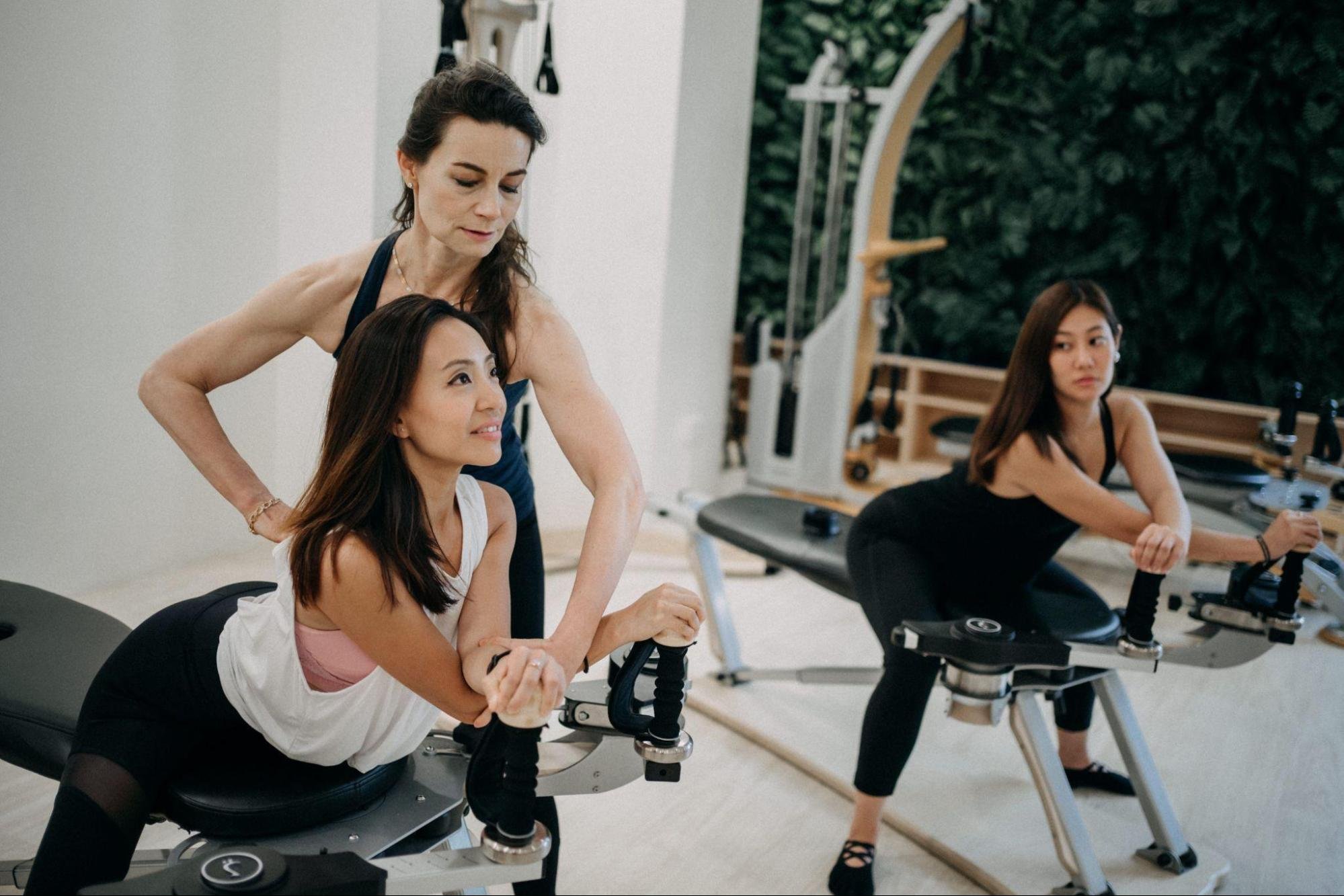
Level 1, often offered as beginner Pilates classes, builds the foundations: your breathing, your alignment, controlled use of the springs, and the core exercises you will keep using for years. Level 2 Pilates adds heavier springs, longer sequences and harder transitions.
Higher levels are not simply tougher. They ask more of your control and concentration, which is why our Pilates instructors decide when you are ready by watching how you move rather than by counting your sessions.
Wondering if you are ready to progress? Book a private Reformer Pilates session with our clinically trained instructors. We will assess your current technique and recommend the appropriate class, apparatus and progression.