How to Strengthen the Pelvic Floor: Pilates for Weak Pelvic Floor Muscles
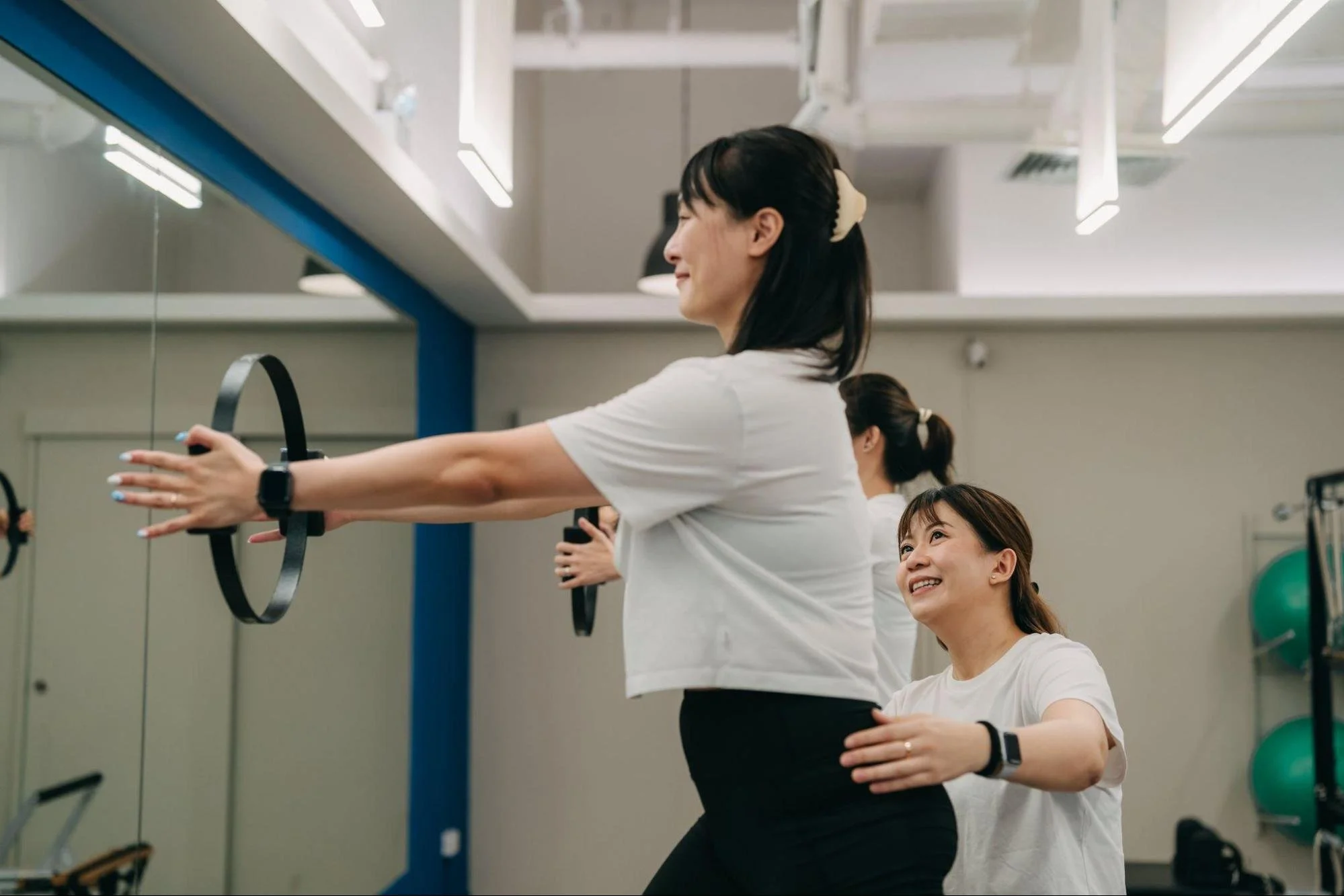
Common patterns of pelvic floor weakness include small leaks, heaviness after a long day, and a sense that your core is firing but the pelvic floor is not responding. Most advice on pelvic floor weakness focuses on Kegels, which can help, but they usually aren't enough on their own for real improvement.
What makes the difference is approaching the pelvic floor as part of a wider system, one that includes the diaphragm, the deep abdominals and the spinal stabilisers working together. That is what well-taught Pilates addresses.
What Are the Signs of a Weak Pelvic Floor?
Pelvic floor weakness can appear in obvious and subtle ways:
Stress Urinary Incontinence: Leaking when you cough, sneeze, laugh, or push harder during a workout.
Urgency or Frequency: Needing the toilet more often than feels normal, or feeling you must find one right now.
Heaviness or Dragging Low in the Pelvis: Often most pronounced by the end of the day, and sometimes paired with reduced sensation.
A Deep Core That Does Not Catch: Bracing to lift, jump, or carry, and nothing answering from below.
Persistent Lower Back Pain: The pelvic floor is part of how the trunk stabilises, so when it underperforms, the back tends to compensate.
Recurring Hip Instability: Another sign that the deep stabilising system is not pulling its weight.
Sometimes the muscles are overactive, gripping and unable to release, which presents differently and calls for the opposite approach. This is one of the clearest reasons self-directed training in strengthening the pelvic floor has its limits, and why an assessment matters before you load up on contractions.
How Pilates Works for Pelvic Floor Strengthening
The pelvic floor does not function in isolation. It works alongside the diaphragm above, the deep abdominals at the front, and the spinal stabilisers at the back, all coordinating to manage intra-abdominal pressure as you move and breathe. When breathing mechanics are poor, that pressure becomes dysregulated, and the pelvic floor is forced into a state of constant, rigid tension it was never designed for.
Pilates addresses the whole system together.
Three main ideas are key to this approach:
Diaphragmatic Breathing: Teaches you to manage pressure on the exhale, so the pelvic floor lifts in coordination with the breath instead of bracing against it.
Transverse Abdominis Activation: It builds the deep abdominal layer that fires in tandem with the pelvic floor.
Progressive Loading: Takes the coordination into functional patterns where strength actually matters.
Pilates for pelvic floor dysfunction takes this further: the programme is tailored to whether the pelvic floor is underactive, overactive, or working asymmetrically.
Pilates Exercises for a Weak Pelvic Floor
The Pilates moves below are appropriate starting points for most people with mild to moderate pelvic floor weakness.
Diaphragmatic Breathing with Pelvic Floor Connection: Lie on your back with your knees bent and feet flat. Place one hand on your chest and the other just below your ribs. Breathe in slowly so your belly and lower ribs expand; feel the pelvic floor gently soften and drop with the inhale. Then breathe out and feel the pelvic floor naturally lift as the abdomen settles.
Supine Bent Knee Fallouts (Hip External Rotation): Lie on your back, bend your knees, and place your feet flat. Inhale and let one knee fall open to the side, then exhale to draw it back in, keeping the pelvis even and the glutes relaxed throughout. The skill being trained in this Pilates pose is the ability to move the hip while the pelvis and pelvic floor stay stable, which maps the demands of everyday situations like climbing stairs.
Bridge with Pelvic Floor Engagement: Lie on your back with knees bent and feet hip-width apart. Inhale to prepare, then exhale and engage the pelvic floor as you press through your feet and lift the hips, taking the spine off the mat one vertebra at a time. Lower with the same control on the inhale. The glutes and pelvic floor work in close coordination, and building that integrated engagement through the bridge develops real functional strength through the whole posterior chain.
Standing Calf Raises with Core Connection: Stand tall with your feet hip-width apart and your weight balanced evenly. Engage your core and pelvic floor, then rise onto the balls of your feet and lower back down with control. This Pilates move reflects daily movements because it helps your pelvic floor do its job of managing pressure inside your abdomen and stabilising your trunk while standing and moving against gravity.
Dead Bug Progression: From supine, bend your knees and rest your feet on the floor with arms long by your sides. Inhale and lift one foot off the floor, then bring your knee above your hip to form a tabletop position. Exhale and lower your foot back to the floor with control. Alternate sides and repeat. Focus on your breath and avoid tensing your abdominals or arching your back, as this can cause your pelvic floor to disengage.
If you have significant concerns, prolapse, or are recovering from surgery, work with a qualified professional before adding load.
When to Seek Clinical Pilates
Trying to manage pelvic floor issues on your own will only take you so far. If you have moderate to severe pelvic floor concerns, a history of prolapse, are postpartum, or are dealing with something that affects your abdominal pressure, working with the right Pilates teacher can help you improve more quickly.
At Breathe Pilates, our instructors work with physiotherapists to design exercises. We keep our group classes small so everyone gets individual attention. Our Pilates reformer classes provide spring-supported resistance and a controlled range, which is effective for pelvic floor work. For pregnant or postpartum women, our prenatal Pilates sessions and dedicated postnatal programmes use the same focused approach to support the body's needs during this important time.
Build Pelvic Floor Strength with Breathe Pilates
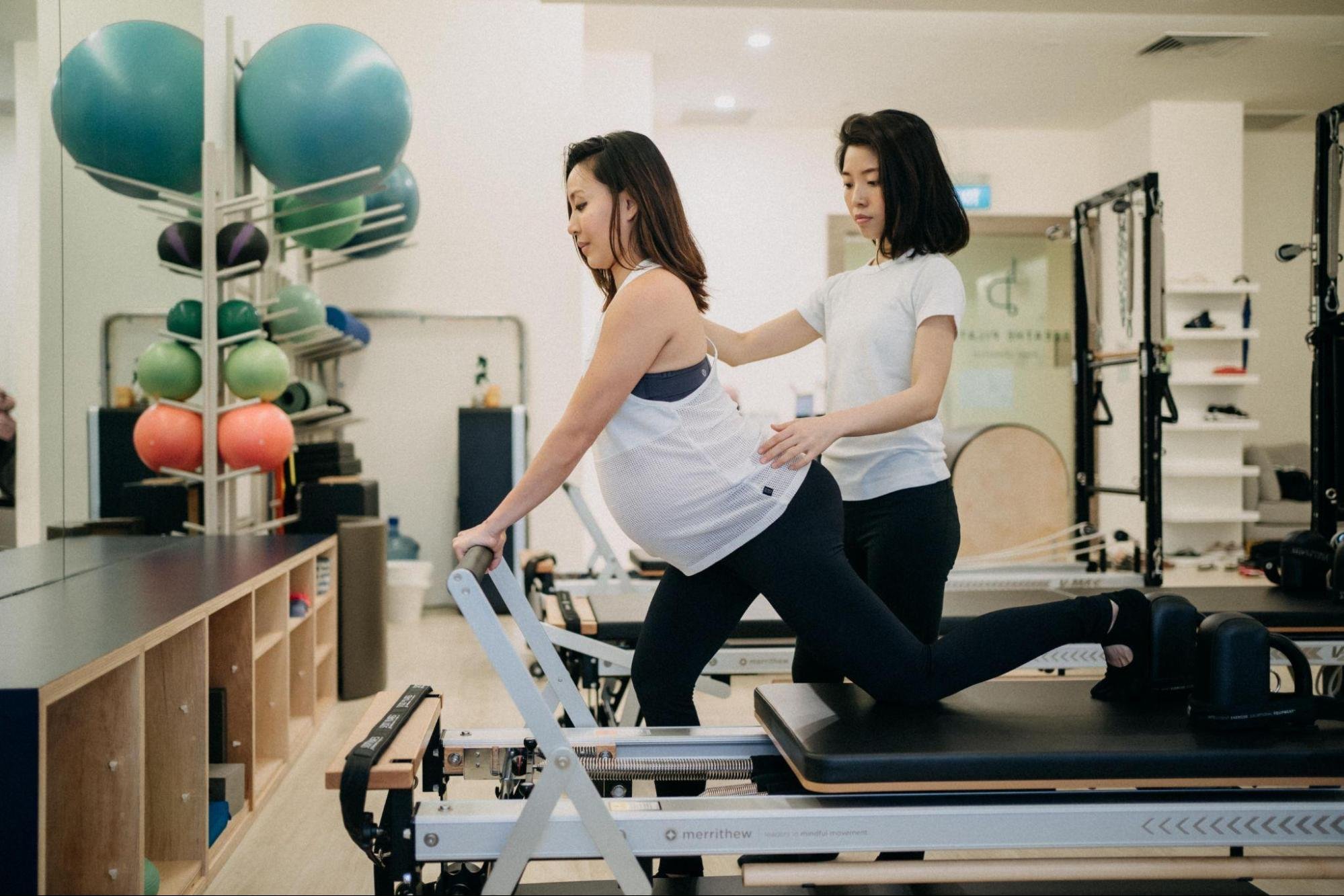
Strengthening your pelvic floor works best when it is approached as a whole system intervention. Pilates provides that framework, and the right instructor ensures the approach matches what your body actually needs.
If you already know your pelvic floor needs attention, you are ahead of many others. What matters now is working with a method and a teacher who can guide you beyond generic advice. Talk to our team, and find out which pilates format suits you best.