Is Pilates Good for Hypermobility?
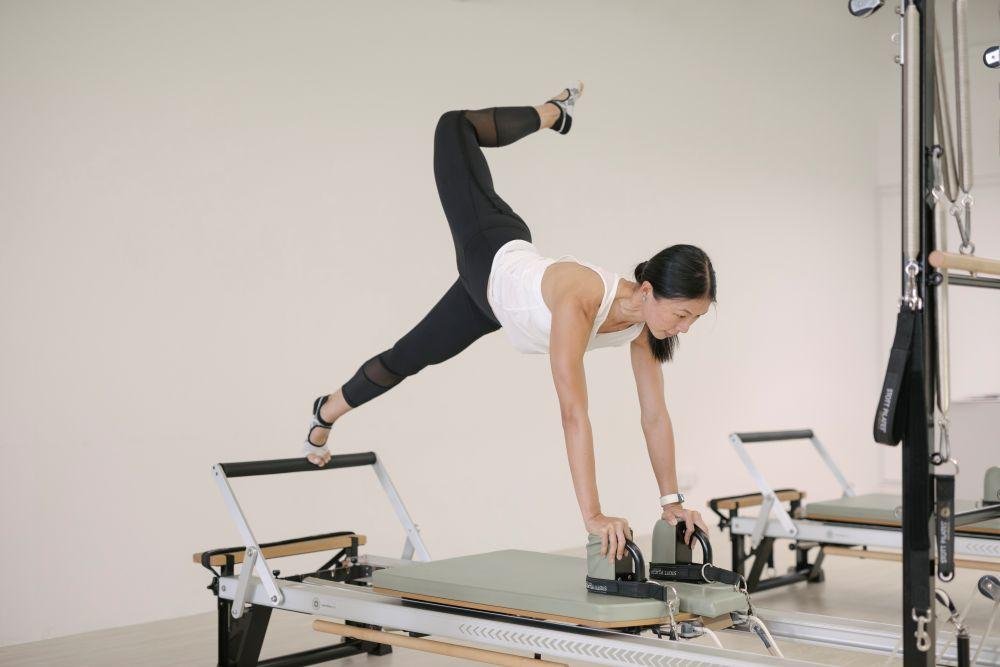
Pilates is considered one of the most appropriate forms of exercise for those with hypermobility because it focuses on control rather than range. Rather than pushing your joints further, it builds the muscular strength and proprioceptive awareness needed to protect them.
For hypermobile individuals, generic fitness classes may leave them with more discomfort than before. But Pilates does the opposite by building active joint stabilisation, restoring proprioceptive awareness, and strengthening the deep core muscles that protect the spine and pelvis.
What Is Hypermobility, and Why Does Training Approach Matter?
Hypermobility describes joints that move beyond the typical range of motion. For some people, this is benign joint laxity. For others, it is part of a broader condition, such as hypermobility spectrum disorder or hypermobile Ehlers-Danlos syndrome.
While hypermobile individuals are often praised for their flexibility, they tend to manage chronic joint discomfort, recurring sprains, and a persistent sense of looseness rather than strength. The issue is not how far the joints move but the absence of muscular control around that movement.
As such, the training approach, particularly clinically informed Pilates, matters far more for hypermobile bodies.
Why Pilates Works for Hypermobility
Three reasons make Pilates good for hypermobility:
1. Joint Stabilisation Through Active Engagement
Most exercise methods that focus on the range of motion cause the body to rely on ligaments and joints to hold positions. Pilates trains the muscles to actively engage and control movement, so the muscles, not the passive connective structures, do most of the work.
For hypermobile joints that already place excess demand on the ligaments and connective tissue, it’s crucial to have that level of muscular engagement.
2. Enhanced Proprioception
Hypermobile individuals commonly experience reduced proprioception, which is the body's sense of where its joints are in space. They also tend to hyperextend a knee without noticing or feel clumsy in movement.
One of the benefits of Pilates is that it rebuilds this awareness through precise positioning, deliberate breath, and slow, controlled movement. Practised consistently, you begin to feel where your range of motion ends before you reach it, helping you prevent injuries.
3. Deep Core Strength Without Bulk
Pilates targets the stabilising muscles of the trunk, the transverse abdominis, multifidus, pelvic floor, and diaphragm, rather than the superficial muscles that high-intensity training tends to prioritise. A strong core protects the spine and pelvis, which are particularly vulnerable to instability for those with hypermobility.
How to Get Started Safely
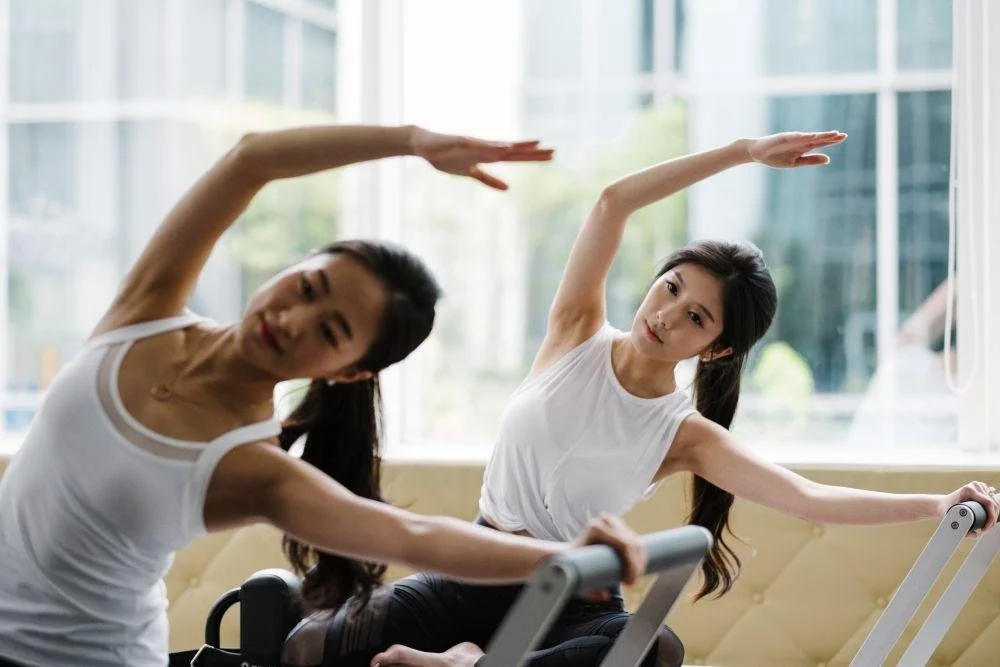
When you have hypermobility, the format of your first Pilates sessions and your instructor's experience will determine how safely and steadily you progress.
1. Begin With Private Sessions
A private Pilates class is the most effective starting point for hypermobile bodies. Your instructor can assess how you move, identify which joints tend to give way under load, and catch the subtle compensations, such as locking a knee or gripping through the hips.
At Breathe Pilates, our instructors are rehab-trained, and several are practising physiotherapists. Every session begins with an individual assessment of your joints, movement patterns, and goals. If you’re starting out in pilates, that foundation shapes how safely and confidently you progress.
2. Consider the Reformer
The reformer is particularly suitable for hypermobile individuals. Its adjustable spring resistance can support the body or load it depending on what you need, and the tactile feedback of the springs helps you sense where you are in a movement. Consequently, you develop your proprioceptive awareness at every stage.
Tips for a Safe Pilates Practice with Hypermobility
A few principles are worth keeping in mind when you’re taking group or private Pilates classes:
1. Avoid Pushing Into End Range
The maximum stretch of a movement is when a hypermobile joint is most vulnerable and when sprains, subluxations, and chronic instability are most likely to develop. A smaller, more controlled movement done well is preferable to a deeper one done with passive support.
2. Work With Smaller Ranges of Motion
Smaller movements activate the correct stabilising muscles more effectively than large, sweeping ones. Big ranges tend to bypass the stabilisers entirely, relying on momentum or ligamentous laxity, which is the opposite of what a hypermobile body needs.
3. Keep Joints Soft, Not Locked
A locked joint transfers load onto the ligaments and connective tissue rather than the muscles. Over time, that pattern leads to discomfort and injury in hypermobile bodies. So, keep a micro-bend at the elbows and knees rather than fully extending them.
4. Seek Medical or Clinical Guidance If Needed
If you experience persistent joint discomfort or dislocations, or are managing a hypermobility-related condition, speak to a doctor or physiotherapist before beginning your Pilates session. They can flag any modifications your instructor should know about from the outset.
Train for Stability, Strength, and Confidence at Breathe Pilates
Pilates can be transformative for hypermobile individuals, but the approach matters as much as the method. The instructor's clinical training, the format of sessions, and the care taken in assessment all determine how you can develop your body’s stability and strength.
At Breathe Pilates, we work with clients across a full range of movement backgrounds, including those managing joint hypermobility who need a clinically informed Pilates approach. As a Pilates studio with rehab-trained and physiotherapist instructors across five locations, we can tailor a programme around your needs and goals.
Get in touch to book a private consultation, and we will put together a programme suited to your joints, your goals, and how you want to move.