Diastasis Recti Exercises: What Is Diastasis Recti and Can Clinical Pilates Help?
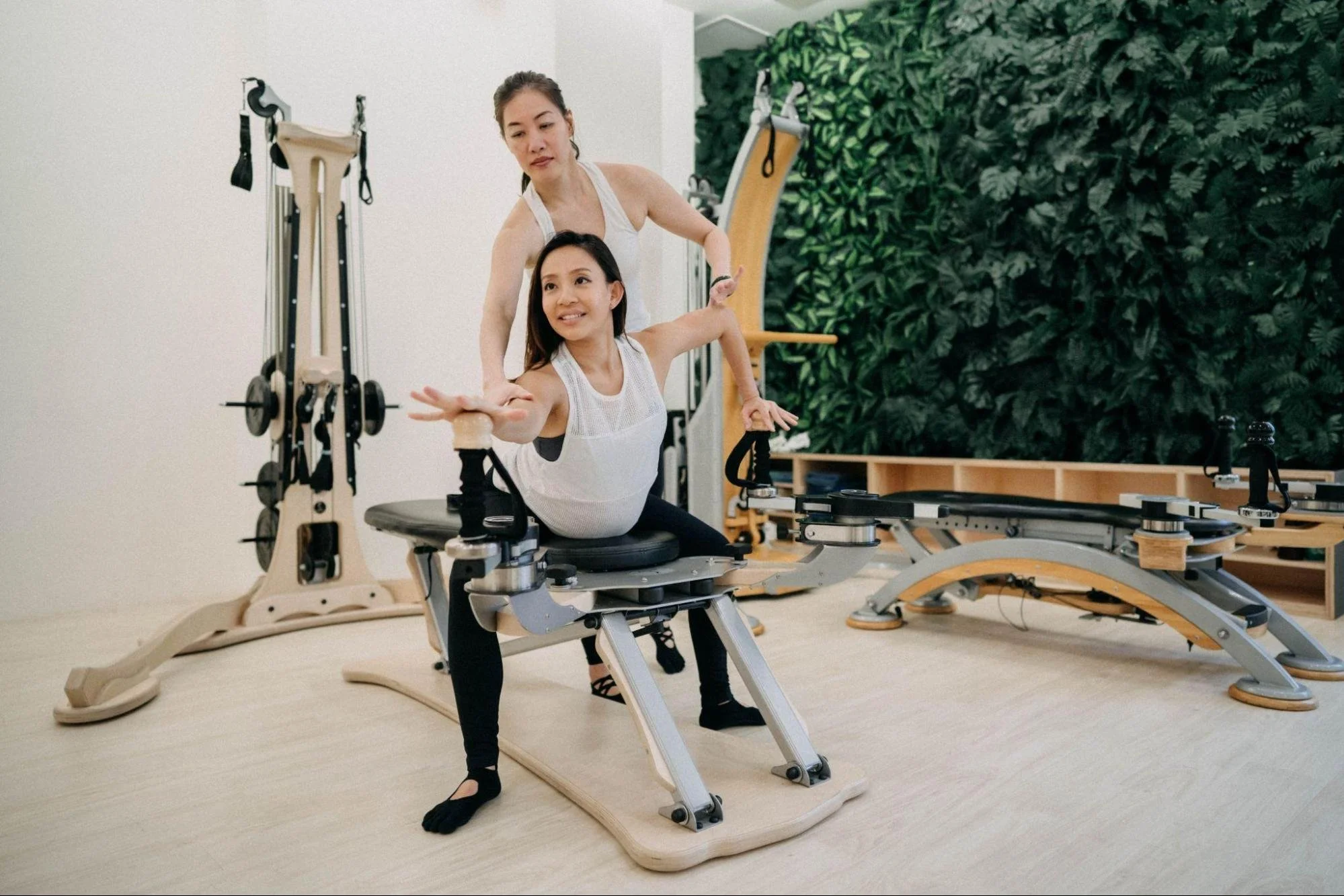
If your core has felt different since pregnancy, Diastasis Recti could be the reason.
It is the separation of the rectus abdominis, the long muscle down the front of your abdomen, along the linea alba, the band of connective tissue running down your midline. As intra-abdominal pressure increases over a pregnancy, that tissue stretches sideways to make room, and the two muscle bellies move apart, leaving a gap, and the abdominal wall loses some of its support.
This is why the problem is so often misunderstood. The separation is a connective tissue problem, not a muscle one, which is why the core can feel weak even in someone who is otherwise fit and strong. And working the surface muscles harder does nothing to restore it. In fact, it can pull the gap wider.
Pregnancy is the most common cause, though rapid weight change and heavy weight loading with poor mechanics produce the same effect.
The signs are consistent: a midline that domes or ridges when you sit up, a lower back that aches without obvious injury, pelvic floor concerns, and a core that no longer responds to the training that used to work.
Most people who reach this point have already tried to train through it and found that conventional core work changed nothing, or made the doming worse.
Clinical Pilates is one of the few approaches that addresses the separation at its root, and the way it does so is where the real distinction lies.
Is Pilates Good for Diastasis Recti?
Pilates is one of the better ways to manage Diastasis Recti, and it is what some women turn to after birth. The catch is that the type of Pilates matters enormously.
A standard group class tends to move through full roll-ups, double leg lowers and plenty of oblique work. On a healthy core, those are good exercises. On a separated one, they push pressure straight into the weakest part of the midline, which is what widens the gap instead of closing it.
The exercises themselves are fine. The problem is doing them before the deep core can handle the pressure, and that is what makes the separation worse.
Clinical Pilates works the other way round.
A rehabilitation-trained instructor checks the separation first, looking at how wide the gap is and how your pelvic floor and deep core are coping, and only then decides what you should be doing. This is really what people are after when they look for Pilates series that target the abdomen after birth, and it is why the kind of Pilates you do, and who is teaching it, makes such a difference.
How Clinical Pilates Helps Diastasis Recti
The reason Pilates works where ordinary core training does not is that it starts deeper down. Before you work through various series or flows, you learn to control the pressure inside your tummy with your breath, and to properly engage the deep core and pelvic floor so they work together again. Only when that foundation is in place does an instructor add movement, and only as quickly as your body is ready.
In the early stages, a clinically trained instructor will often work through a small set of foundational Diastasis Recti exercises:
Connected breathing: Lying on your back, you breathe out and draw the lower tummy in without pushing your chest out or holding your breath. It teaches you to manage pressure across the linea alba, which is the foundation that every Pilates core exercise relies on.
Heel slides: In the same position with your knees bent, you slide one foot slowly along the floor while keeping your back still and your deep core engaged. It gets the midline working without letting it dome or strain.
Modified dead bug: Opposite arm and leg extend slowly from supine while the deep core remains engaged. The moment the midline domes, the range comes back. As control improves, the range can increase.
None of this is prescribed off a template. What suits you six weeks postpartum is very different from what suits you six months on, and a good Pilates instructor lets your body set the pace, not by a fixed timeline.
What to Look for in a Postnatal Pilates Programme
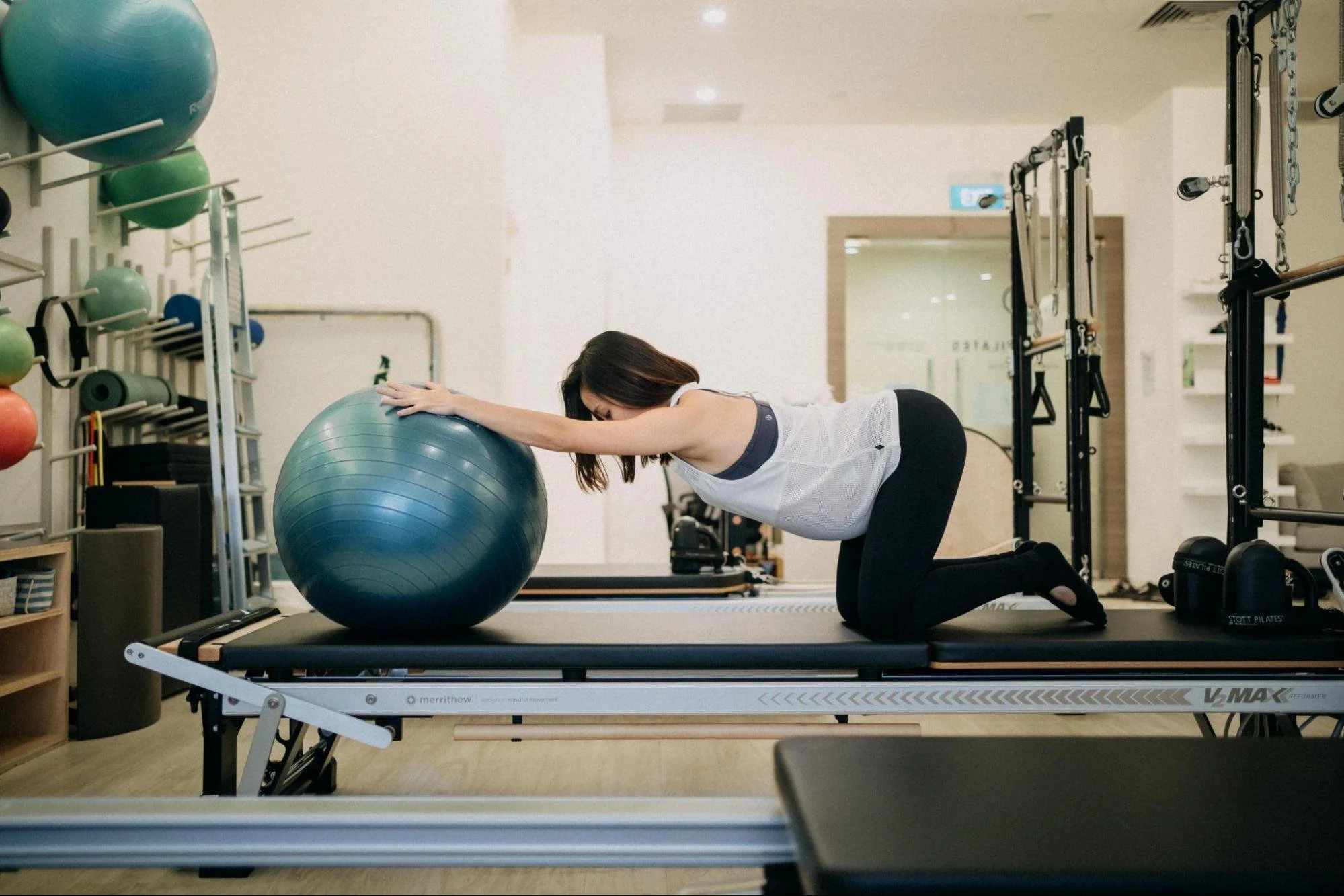
Not every class marketed as postnatal or postpartum Pilates is equipped to manage the separation brought about by Diastasis Recti. Three things tell you whether one is:
The instructor's training: A separation in the connective tissue needs someone with rehabilitation experience, a clinical Pilates background or a physiotherapy qualification. A general group fitness instructor, however good, is not trained for this.
Assessment before exercise: A programme that takes Diastasis Recti seriously checks how wide the gap is and how your pelvic floor and deep core are functioning before any routine.
The right format: Real-time correction is the whole point. Private Pilates and small groups allow an instructor to watch the midline, adjust the load and change direction on the spot.
Finding the Right Programme
Diastasis Recti responds to the right approach and resists the wrong one, and the gap between the two is not cosmetic. It is about whether your core can support your back, your pelvis and everything you ask of your body in a normal day, whatever caused the separation in the first place.
If you already know you have it, you are ahead of a lot of women who never find out what they are feeling. The next step is finding people with the right training to guide you through it.
At our Pilates studio, our rehabilitation-trained instructors teach Clinical Pilates in private and small group sessions across five locations, and every programme starts with a proper assessment.
To find out how a programme would be structured around your recovery, call us on +65 6571 0665, message us on WhatsApp at +65 9835 5683, or send us a message through our website.