Chair vs Reformer Pilates: Which One Is Right for You?
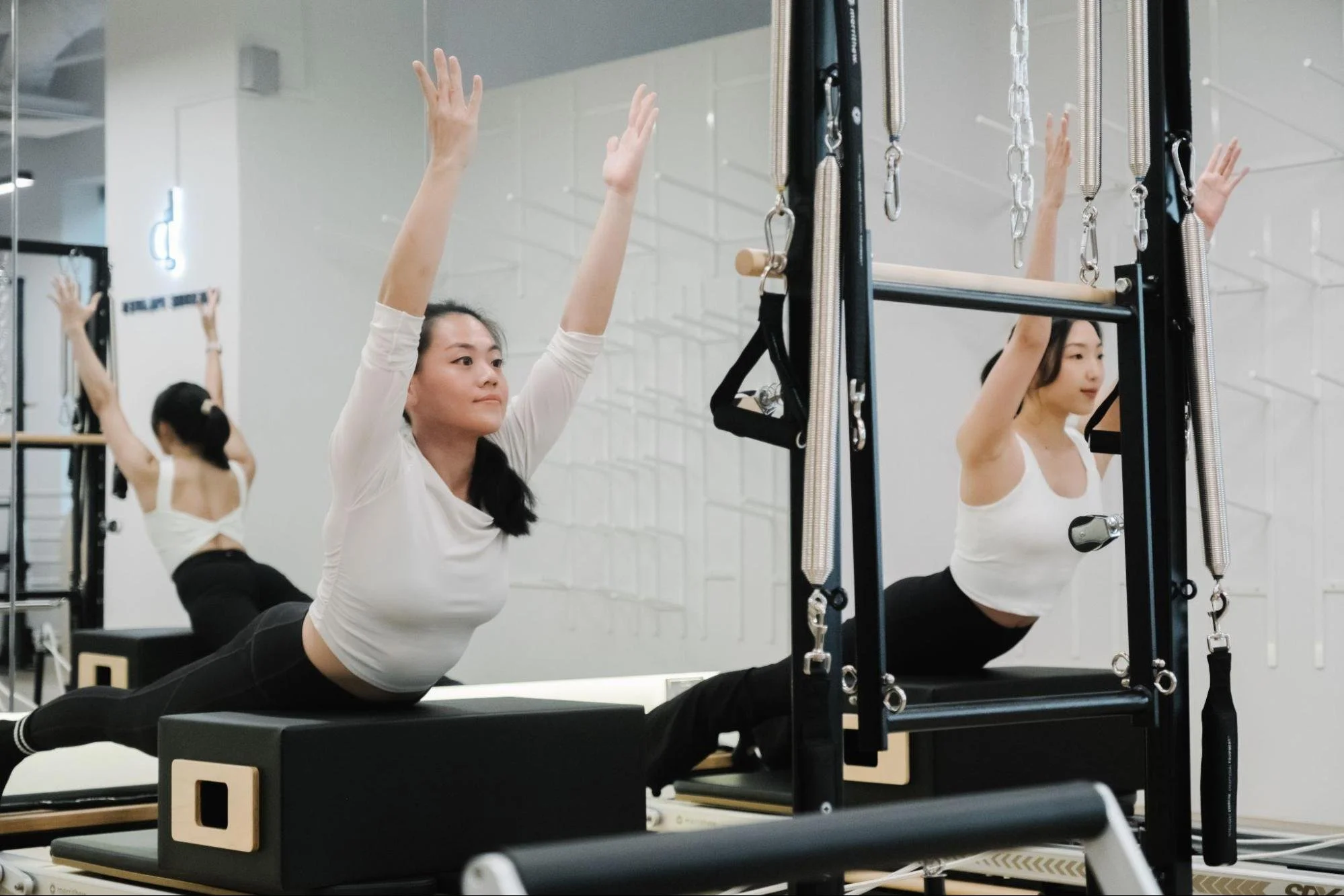
Chair and Reformer Pilates follow the same principles: controlled movement, proper alignment, coordinated breathing and strength through the whole body. What changes is the amount of external support each apparatus provides.
The Reformer has a moving carriage, straps, a footbar and adjustable springs. These features support your body in various positions while providing resistance to work against. The Chair has a much smaller surface and no moving platform beneath you. In standing, kneeling and single-leg exercises, your core, hips, shoulders and feet must keep your body steady while you control the spring-loaded pedal.
Whether you are new to Pilates, plateauing on the Reformer, or ready to approach your practice differently, the decision depends on how much support you need and which areas you want to strengthen.
What Is Chair Pilates?
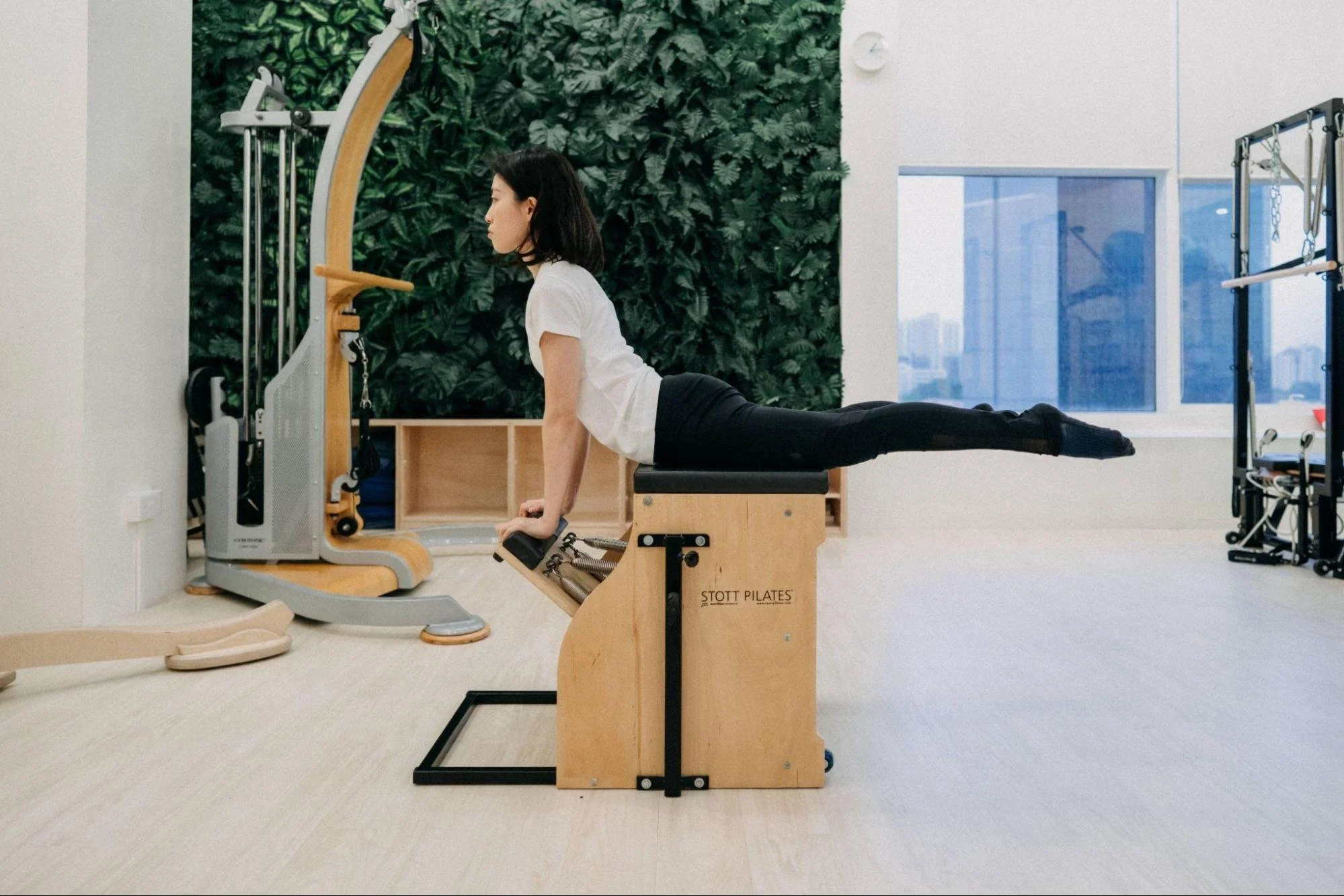
The Wunda Chair is a compact, box-shaped Pilates apparatus with a spring-loaded pedal at its base. Exercises may be performed sitting or lying on the box, kneeling on top of it, standing beside it or pressing the pedal with the hands or feet, with the resistance adjusted by changing the spring setting and attachment point.
Joseph Pilates originally designed the Wunda Chair to double as a piece of furniture in small apartments. Modern versions, such as the MERRITHEW™ Stability Chair™ used in STOTT PILATES® studios, include adjustable handles, several spring settings and split pedals that can move together or independently. This allows instructors to programme more focused exercises for balance, lower-limb strength, shoulder stability and rehabilitation.
What Is Reformer Pilates?
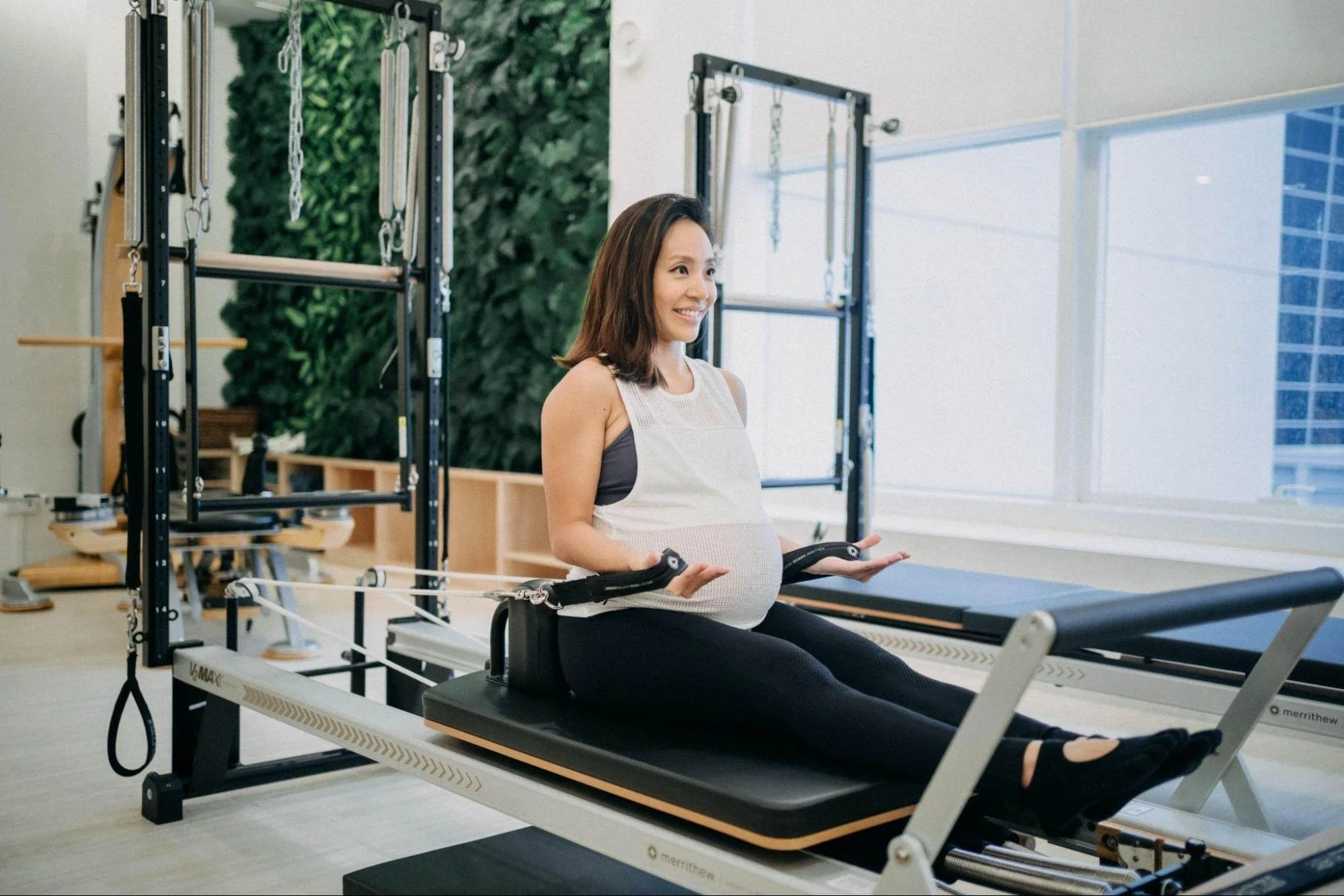
The Reformer is a horizontal frame with a sliding carriage, adjustable spring resistance, shoulder rests, straps and a footbar. Hundreds of exercises can be performed on it while lying, seated, kneeling or standing, making it suitable for a wide variety of full-body movements.
Its defining feature is that the springs work in both directions. When you move the carriage away from its starting position, the springs create resistance. As the carriage returns, the springs pull it back, and your muscles must control that return rather than allowing it to close abruptly. This versatility allows instructors to adapt Reformer exercises for beginners learning Pilates technique, people following a rehabilitation programme and experienced practitioners working on more complex movement sequences.
Wunda Chair vs Reformer Pilates: The Key Differences
Both use spring resistance to train the whole body, but they differ in the positions used and the amount of support each apparatus provides.
The Setup
The Reformer provides more external support through the carriage, straps and footbar. On the Chair, you must engage your core, hips and shoulder stabilisers to maintain alignment while controlling the pedal.
|
Reformer |
Wunda Chair |
|---|---|
|
Sliding carriage takes part of your body weight |
Stationary box, no carriage, no assistance |
|
Work performed lying, kneeling or seated on the carriage |
Work performed upright and weight-bearing |
|
Springs assist or resist as the carriage travels |
Springs resist a pedal you press down and control back up |
Primary Focus
The Reformer develops coordinated, full-body movement, while the Chair places greater emphasis on balance, single-sided strength and core stability.
|
Reformer |
Wunda Chair |
|---|---|
|
Full-body, evenly distributed loading |
Stability and single-sided loading |
|
Both sides usually work together |
One limb presses the pedal, the other cannot compensate |
|
Strength and control across major muscle groups |
Deep stabilisers of the hips, shoulders, spine and feet |
Benefits
The Reformer offers greater exercise variety, with movements adapted through spring tension, body position and range of motion.
Full-Body Conditioning: The repertoire covers every major muscle group, with spring resistance that loads the joints without impact.
Adaptable for Different Levels: Spring tension, body position and range of motion can be adjusted to suit your strength, control and experience.
Support Through Recovery: The carriage takes load the body is not yet ready to accept.
The Wunda Chair provides less external support, placing greater demands on balance, stability and control.
Balance And Agility: Standing and kneeling exercises require continuous engagement of the deep abdominal muscles, spinal stabilisers, glutes and muscles around the hips, ankles and feet to maintain alignment while the pedal moves.
Eccentric And Unilateral Strength: Many Chair exercises work one arm or leg at a time. You press the pedal down against resistance, then control its return as the spring pulls it back up.
Plateau Breaking: The smaller base of support and single-sided movements make it harder for the stronger side to compensate. Differences in strength, balance and control therefore become easier to identify.
Movement Style
Reformer exercises often involve larger movements, with the carriage moving smoothly in and out as you maintain control.
Chair work is stationary and compact. Movements are smaller, slower and tightly controlled, and your body does the stabilising the carriage would otherwise handle.
Should You Choose Wunda Chair or Reformer?
The better fit depends on how much support you need and what you want to work on.
Start On The Reformer If: You are new to Pilates, want balanced full-body conditioning or would benefit from more support while building strength, mobility and control. Its carriage, straps and adjustable springs allow exercises to be modified around your current ability.
Move To The Chair If: You want to address specific imbalances, sharpen balance and agility, or add high-intensity stability work to an established practice. It suits athletes, runners, people completing a recovery programme, and practitioners working through a plateau.
Most people progress across both. The Reformer establishes strength and control with the carriage supporting the work. The Chair then loads that strength unsupported, one side at a time, where remaining weakness shows.
Explore Both With Expert Guidance at Breathe Pilates
Spring tension and exercise selection should be adjusted to your strength, mobility, control and any physical limitations. Because a small change in the setup can alter the muscles working and the level of support provided, the instructor’s judgement matters as much as the apparatus itself.
We are a MERRITHEW Licensed Training Centre teaching the STOTT PILATES method, and our instructors are internationally certified and rehabilitation-trained, including qualified physiotherapists. Across our five studios, we run small-group sessions on both apparatus, capped at six, so technique can be corrected as you work. A private Pilates class is where we assess how you move and decide which apparatus suits your goals.
Book a Chair or Reformer Pilates session at Breathe Pilates and experience the differences between the two practices.