Pilates vs Yoga: Which One is Right for You?
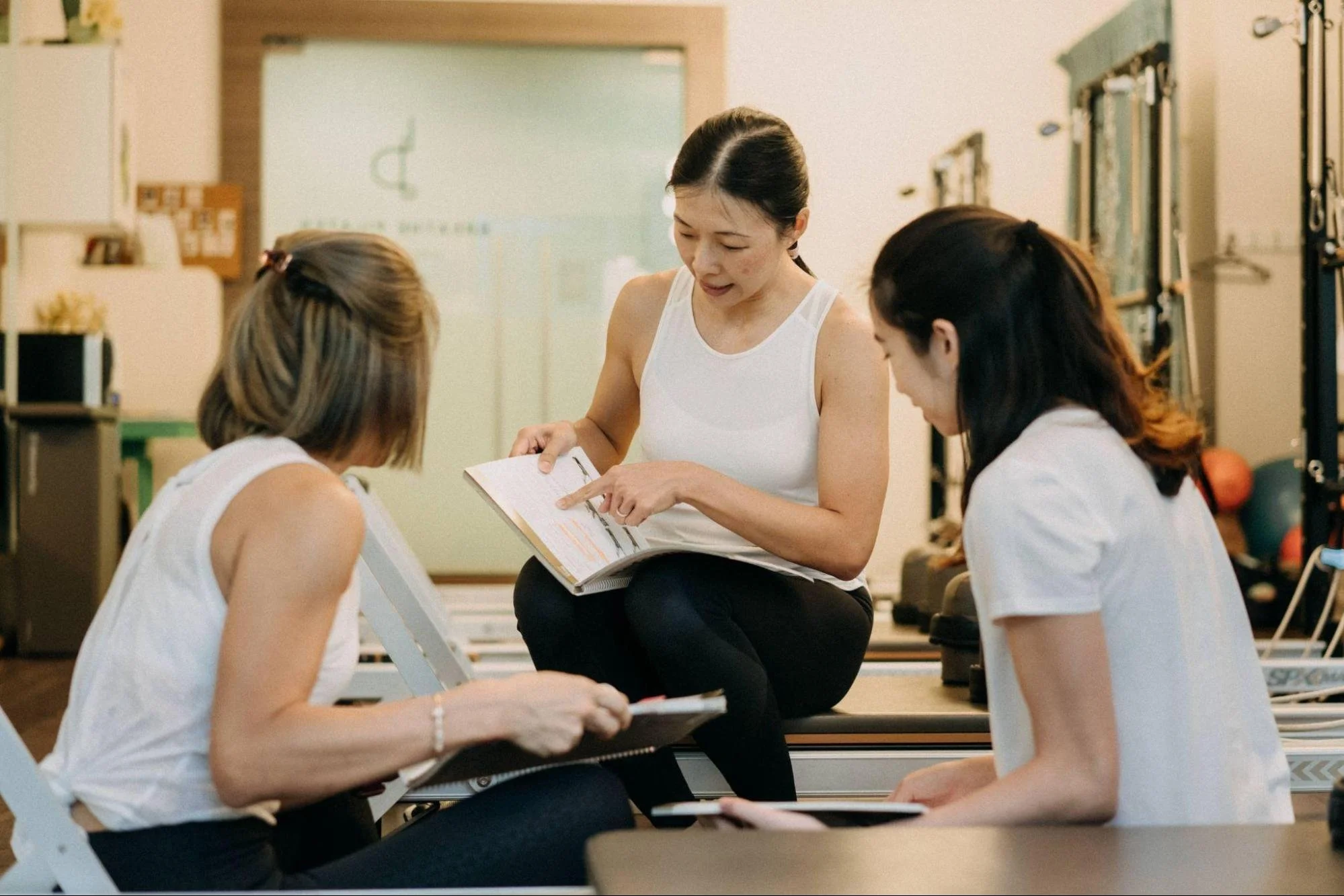
Pilates and yoga are often compared because both encourage you to move with intention, pay attention to your breathing, and become more aware of how your body works. From the outside, they can look quite similar.
Despite these similarities, they are designed to achieve different outcomes.
Pilates is fundamentally a strength and alignment practice, focused on developing core strength, improving posture, and helping your body move with greater stability and control. Yoga emphasises flexibility, breathwork, and stretching, encouraging mobility, balance, and a connection between the body and mind.
What Does Pilates Mainly Train?
Developed in the early 20th century by Joseph Pilates, Pilates originated as a rehabilitation system for injured soldiers and was later adopted by dancers.
Core Strength and Alignment: Pilates activates the deep stabilising muscles of the core and spine through targeted movement, building strength alongside better spinal alignment.
Apparatus-Based Progression: Beyond mat exercises, Pilates apparatus such as the Reformer, Cadillac, Chair and Barrels vary resistance and support, making the practice adaptable for any body.
Clinical Application: Because Clinical Pilates focuses on strength, stability, joint alignment and movement control, it is used alongside physiotherapy for managing postural concerns, joint discomfort and post-surgical recovery.
What Does Yoga Train?
Rooted in ancient Indian philosophical and spiritual tradition, yoga has been practised for thousands of years.
Flexibility, Balance and Breath: Yoga builds range of motion and physical awareness through sustained holds and posture-based movement, making it effective for those whose bodies feel tight or whose movement has become restricted over time.
A Range of Styles: Hatha introduces postures and breath at a foundational pace; Vinyasa flows through breath-linked sequences; Yin targets deep connective tissue with long passive holds; and Ashtanga follows a fixed, physically demanding series.
Mind-Body Connection: Yoga encourages you to slow down and pay attention to your breath and body. For many people, it becomes more than just exercise, offering a chance to unwind, clear the mind, and feel more present.
Pilates vs Yoga: Which is Harder and Which is Better?
Both Pilates and yoga are demanding, but they challenge the body in different ways. Rather than ranking one better than the other, it is more useful to understand what benefits each provides.
Pilates |
Yoga |
|
|---|---|---|
What Makes It Challenging |
Demands precision, control and deep muscle engagement that fatigues quickly, even in small ranges of movement. |
Requires patience, mobility, and breath endurance, with poses held for extended periods. |
What Does Each Practice Do Best? |
Develops core strength, stability, posture, and muscular endurance. |
Improves flexibility, balance, breath control, and body awareness. |
How to Decide Which One Suits You
Choose Pilates if you are:
Managing an Injury or Postural Concern: Based on rehabilitation principles, Pilates helps manage back pain, joint discomfort, and movement imbalances that contribute to recurring pain.
Desk-Bound for Long Hours: Prolonged sitting tightens the hip flexors, rounds the shoulders forward and stiffens the upper back. Pilates directly targets these patterns, restoring mobility and relieving the tension that accumulates over a working week.
Returning to Movement After a Major Change: Whether you are postnatal, post-surgical, or resuming exercise after a long break, Pilates is designed to be modified and progressively advanced, to support your transition back to physical activity.
Looking to Improve Functional Strength: Pilates develops muscular endurance and core stability through guided exercises, developing strength that carries into how you move every day.
Choose yoga if you are:
Building Flexibility and Balance: Yoga's stretching-based movements and postures can help improve flexibility, mobility, and physical awareness.
Drawn to a Meditative Practice: Yoga's emphasis on breath awareness and mindfulness fosters mental clarity, relaxation, and mind-body connection.
Interested in Different Approaches to Movement: Yoga encompasses a wide range of approaches, from the foundational pace of Hatha and the passive holds of Yin to the breath-linked flow of Vinyasa and the intensity of Ashtanga.
Aligning Your Body Goals With the Right Practice
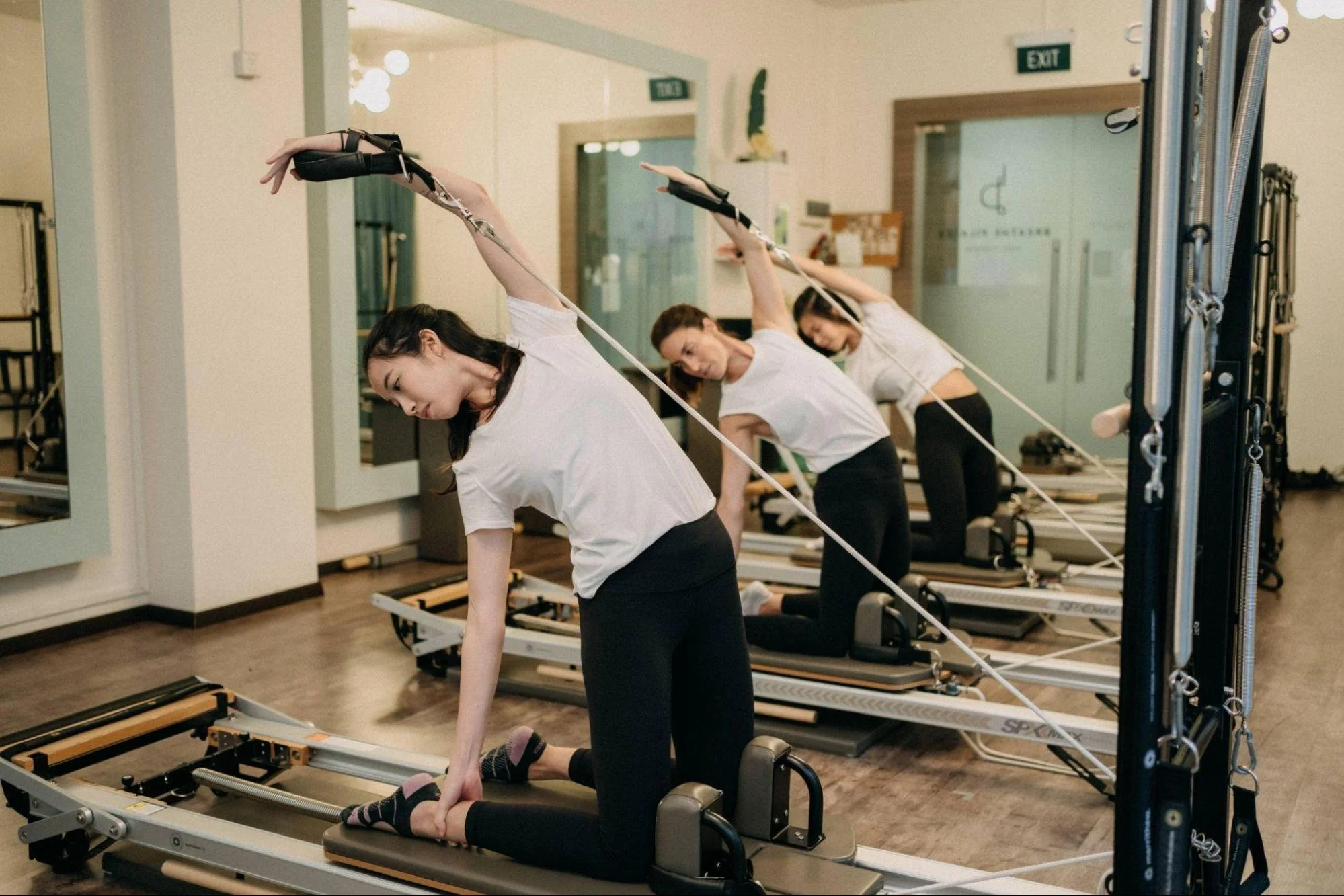
Both Yoga and Pilates offer value. The right choice is the one that best matches what your body needs right now and what each practice is built to deliver.
If you are considering trying Pilates, come and speak to our team. We offer private Pilates sessions and small group classes across five studios, led by internationally certified, rehab-trained instructors, several of whom are physiotherapists. Tell us about your goals, your body and fitness level, and we will help you find the right programme to begin.
Visit our Pilates studio or reach out to us on WhatsApp at +65 9835 5683.