Is Pilates Good for Osteoporosis & How Do You Train Safely?
Osteoporosis affects between 9.3% and 19.4% of postmenopausal women, and many receive the diagnosis with little guidance on what to do about it physically.1 Since the conversation tends to focus on bone density scores and medication, you might wonder what kind of exercise is safe and what might help preserve mobility.
The good news is that Pilates is worth considering for those with Osteoporosis. This resistance-based exercise is adaptable in ways that align well with what’s recommended for bone health.
However, not every Pilates class is appropriate for someone with low bone density, and the instructor matters as much as the method.
Why Movement Matters More After a Bone Density Diagnosis
Osteoporosis is a loss of bone mineral density that increases fracture risk, most notably in the spine, hip and wrist. For many people, the instinct after diagnosis is to move less and protect bones that feel fragile.
The clinical consensus, however, points in the opposite direction. Weight-bearing and resistance-based exercise is one of the most recommended strategies for maintaining bone density and reducing fracture risk over time.
Pilates, when adapted appropriately, fits within that category.
A well-designed Pilates programme for Osteoporosis aims to do four things:
Load the bones safely to stimulate the mechanical signals that support density maintenance.
Build the postural muscles that protect the spine.
Improve balance and proprioception to reduce the likelihood of a fall, which often leads to a fracture.
Avoid specific movement patterns that place excessive compressive stress on vulnerable vertebrae.
What Pilates Does Well for Osteoporosis
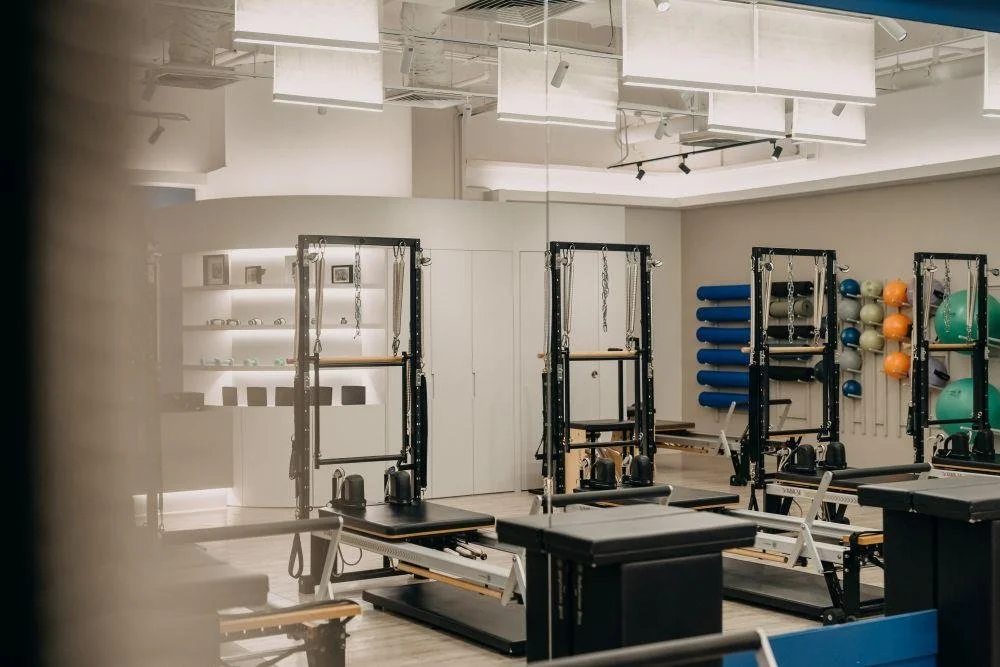
Pilates is, at its core, a resistance-based practice that focuses on postural strength, controlled movement and spinal alignment. The qualities and benefits that Pilates offers are particularly well-suited for someone with Osteoporosis:
Back Extensor Strength: Pilates targets the muscles along either side of the spine that hold the torso upright, counteracting the postural collapse associated with vertebral thinning.
Hip and Leg Strengthening: The hip and femoral neck are among the most fracture-prone sites in Osteoporosis, and lower-body loading in Pilates develops the muscular support around these regions.
Balance and Proprioception Training: Many reformer exercises require single-leg stability and controlled weight transfer, training the neuromuscular responses that help prevent falls.
Controlled, Graduated Resistance: The reformer applies load through standing and weight-bearing positions in an adjustable, supervised manner, making it suitable for someone managing low bone density.
This is why reformer pilates, properly supervised, is often a good addition to an Osteoporosis-friendly movement plan.
What to Avoid in Pilates if You Have Osteoporosis
Not all Pilates exercises are safe for Osteoporosis, and movements that raise vertebral fracture risk include:
Loaded spinal flexion, meaning rounding the spine forward under load. This covers the classic roll-up, roll-over, spine stretch forward, and much of the traditional abdominal series.
Deep spinal twisting, particularly when combined with flexion.
End-range forward folds, even without additional load.
Quick or ballistic movements that place sudden, uncontrolled force through the spine.
A clinically informed Pilates programme replaces these with extension-based work, neutral-spine strengthening, and slow controlled loading. And at Breathe Pilates, we adapt the training method to your health history and physical profile rather than deliver from a standard class plan.
Why Who Teaches You Matters
A general group reformer class, even at a reputable Pilates studio, is not the ideal starting point for someone with Osteoporosis. An instructor without clinical training may not recognise which exercises pose a risk, and a group setting offers limited opportunity to adapt the programme to the individual.
What to look for instead:
Clinical or Rehabilitation Training: A physiotherapy background indicates that the instructor understands bone health mechanics and knows when and how to modify exercises.
Private or Small-Group Sessions: A programme built around your specific bone density results, posture and movement patterns is safer than following a standard class plan.
A Willingness to Work Alongside Your Healthcare Team: The ideal instructor will liaise with your doctor or physiotherapist. And if you are new to Pilates, this collaborative approach can set the right direction from the very first session.
Move with Proper Guidance
An Osteoporosis diagnosis doesn’t necessarily mean you have to stop moving. It may be a reason to move with informed support.
At Breathe Pilates, our instructors include physiotherapist-trained practitioners who can work with clients managing low bone density. If you have received a diagnosis, let’s have a conversation about it.
Bring any guidance from your doctor, and let us design a private Pilates class around your body’s needs and goals.
Reference:
1 – Frontier Healthcare Group. (2024, August 14). Osteoporosis. Frontier Healthcare Group. https://frontierhealthcare.com.sg/osteoporosis/