Pilates for Scoliosis: Merrithew (STOTT) vs. Classical
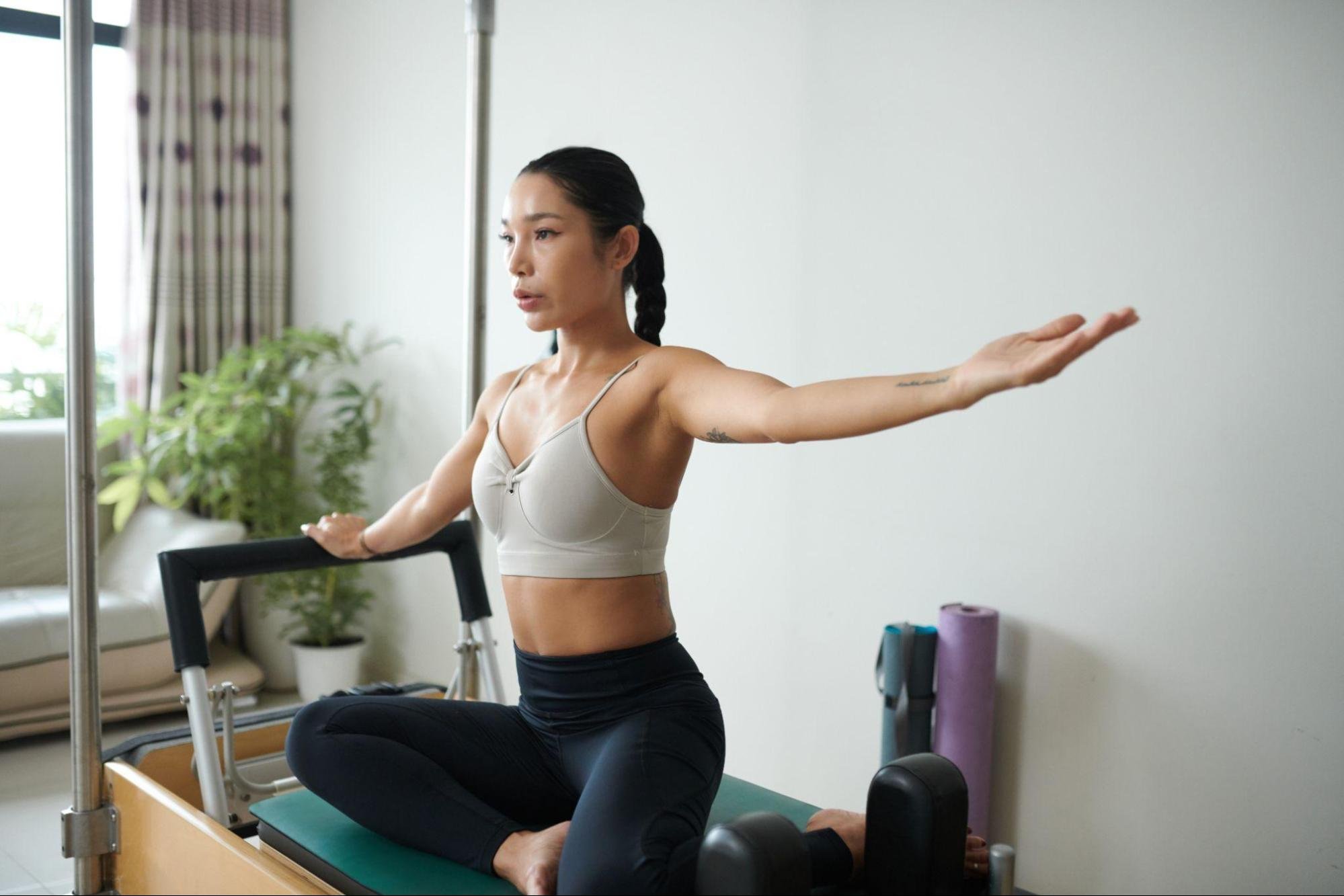
Scoliosis is not a single, fixed thing. The lateral curvature looks different in every person who has it, and so do the muscle imbalances, the areas of tightness, and the patterns of discomfort it creates. What follows from this is straightforward: the movement approach you use to manage naturally needs to be just as individual.
Pilates has a strong track record as a tool for managing scoliosis, and many people find meaningful, lasting relief through consistent, well-taught practice. But if you have attended regular classes and found the results disappointing, there is usually a reason for that, too. The gap between Pilates that genuinely supports a scoliotic spine and Pilates that simply happens alongside it often comes down to one thing: the methodology behind your instructor's training.
To understand why, it helps to look at classical vs contemporary Pilates and how they treat the spine.
How Pilates in General Can Help Scoliosis
The lateral curvature of a scoliotic spine creates a predictable pattern of problems. Muscles on the concave side become shortened and overworked, while those on the convex side lengthen and weaken. Posture shifts and load are distributed unevenly across the spine and ribcage. Over time, these imbalances can contribute to chronic discomfort and reduced mobility, and without the right movement intervention, the curve may progress.
Pilates addresses these issues at the source. Through controlled, precise movement, it rebuilds core stability, works to correct postural imbalances, and improves the muscular symmetry that a curved spine disrupts. Consistent, well-supervised practice can relieve the discomfort that builds along the back and ribs, and research supports its role in managing curvature progression in mild to moderate cases.
There is a caveat worth naming, though. Scoliosis is, by definition, asymmetric, which means a standard class format rarely provides enough. Effective management thus calls for a programme tailored to your individual curvature rather than a generalised sequence applied equally to everyone in the room.
Classical Pilates and the Spine
Classical Pilates follows Joseph Pilates' original method: a structured sequence of exercises performed in a set order, often with an emphasis on spinal extension and a standardised approach to alignment. For many bodies, it works well. The repertoire is comprehensive, and the method is rigorous.
Where it falls short for scoliotic spines, however, is in its inherent symmetry. A fixed sequence designed for a neutral spine does not account for the asymmetric corrections a curved spine needs. Exercises that load both sides equally may reinforce existing imbalances rather than address them. Instructor experience varies widely, too and without specific training in spinal conditions, a classical instructor may not have the framework to modify safely around an individual curve. For many people with scoliosis, the result is a practice that feels generally beneficial but fails to shift what matters most.
The Merrithew™ (STOTT) Difference
The contemporary Merrithew methodology, which underpins STOTT PILATES®, was developed in collaboration with physical therapists, sports medicine professionals and rehabilitation specialists. This is not simply a stylistic distinction between different types of Pilates. It reflects a fundamentally different relationship with the spine.
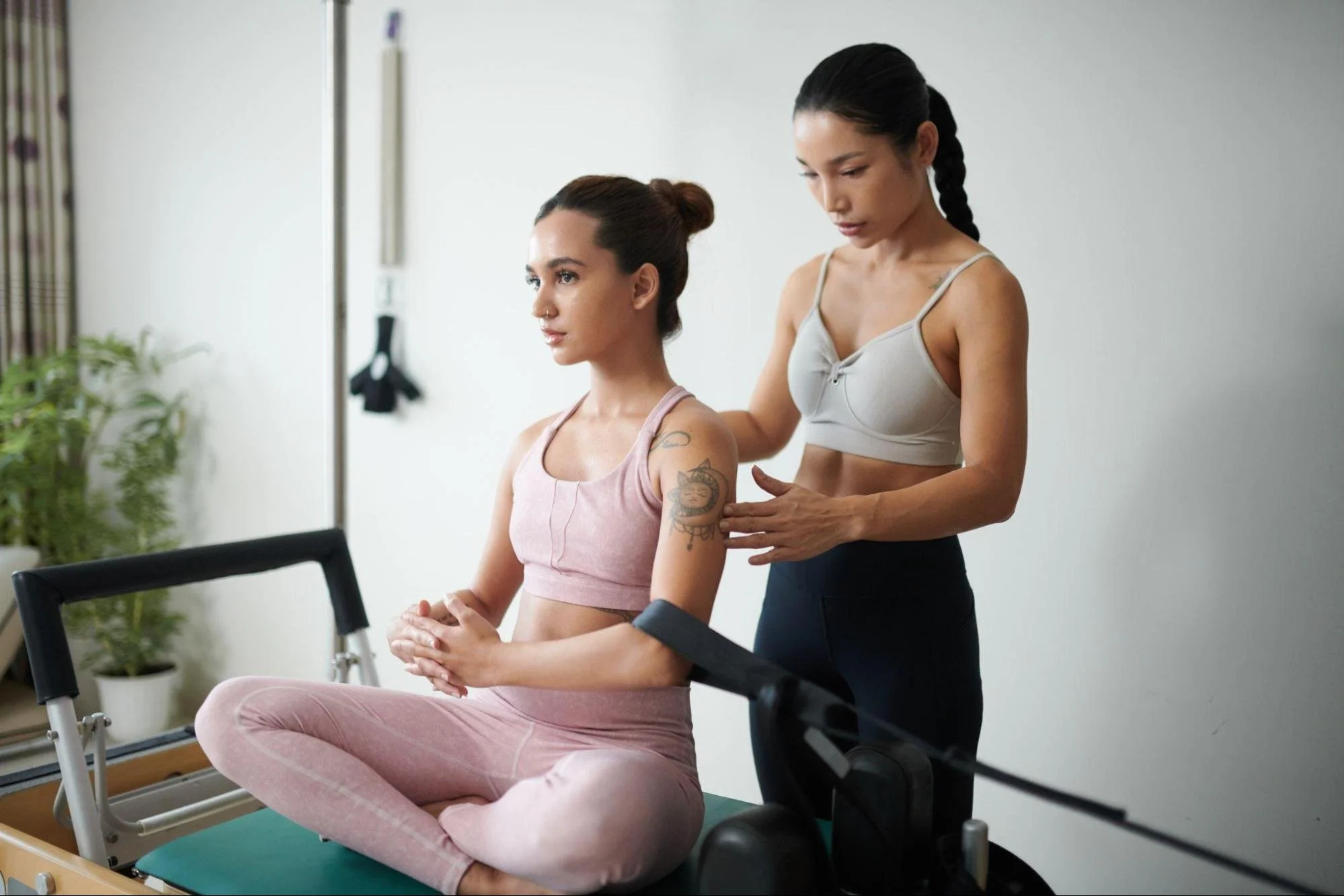
Where classical Pilates applies a fixed approach to spinal positioning, the Merrithew method works with the body's natural spinal curves and builds adaptability into its foundation. Exercises can be modified, sequenced and progressed based on individual assessment rather than a set order. For someone managing scoliosis, this matters considerably. It allows a trained instructor to address lateral imbalances directly, to work one side of the body differently from the other, and to progress the programme as strength and mobility improve. The clinical framework is built into the methodology, instead of being improvised on top of it.
What to Look for in a Scoliosis Pilates Programme
A few practical questions will help you identify the right studio and programme before you commit.
Instructor credentials. Rehabilitation training and a clinical Pilates background mean your instructor has been trained to assess and work around spinal conditions, not simply teach a standard sequence to whoever is in the room.
Class format. Small group or private sessions make curvature-specific modifications possible. In a large class, the individual attention a scoliotic spine genuinely requires is difficult to deliver consistently.
Studio methodology. Ask which method the studio teaches and whether instructors have specific experience with spinal conditions. The answers will tell you a great deal about what you can expect.
At Breathe Pilates, our instructors hold STOTT PILATES® certification and several bring rehabilitation backgrounds, including physiotherapy. We work in small groups of up to six participants, and offer private Pilates sessions, including private reformer Pilates, to build a programme around your specific curvature from the very first class. If previous sessions have not delivered the results you were hoping for, this level of individual attention is usually where the difference lies.
The Right Approach Makes the Difference
So can Pilates help scoliosis? The evidence and our own experience say yes, and meaningfully so, but only when the approach is right. The methodology and the instructor matter as much as the practice itself. The right programme will assess how your spine moves, address the imbalances specific to your curvature, and progress you steadily, rather than relying on a fixed sequence and hoping it fits.
If you would like to understand what a personalised scoliosis pilates programme could look like for you, we would be glad to talk it through. Get in touch with us by telephone on +65 6571 0665, on WhatsApp at +65 9835 5683, or send us a message.